
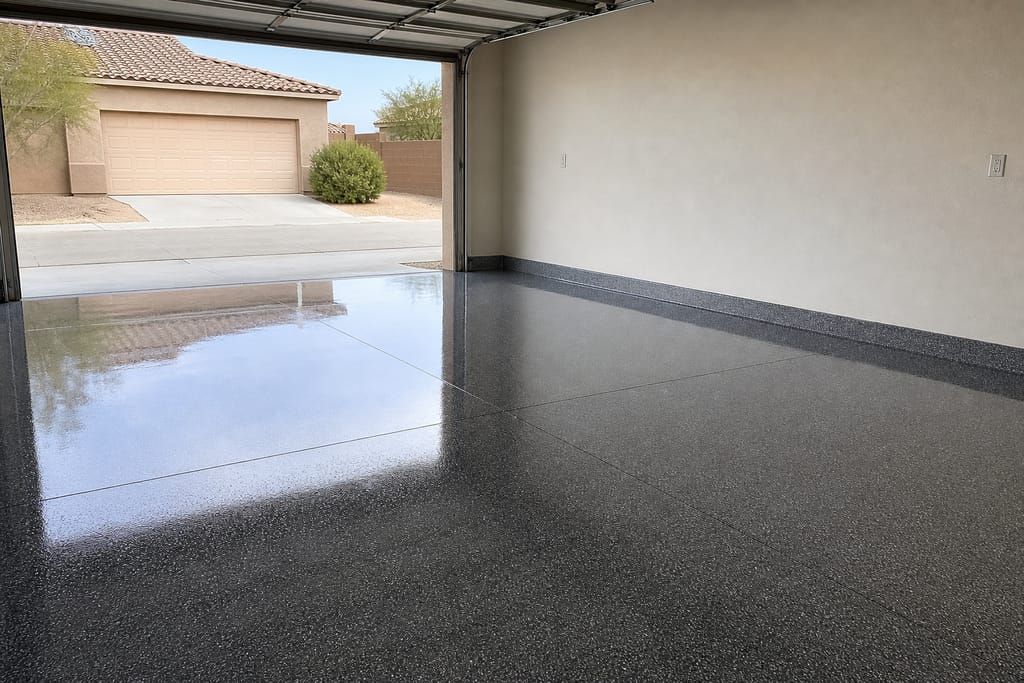
Glendale Epoxy Pros
Polyaspartic Floor Coatings in Glendale, AZ
Fast-cure polyaspartic floor coatings in Glendale, AZ. Heat-tolerant, UV-stable finishes with same-day park-ready turnaround. Free estimates.
- 15+ Years local experience
- 500+ Projects completed
- Licensed & Insured
Serving Glendale and nearby communities.
A standard epoxy system can take days to cure, and that's a problem when a Glendale garage slab is sitting at 130°F plus in July. Polyaspartic resin reacts fast enough to beat the heat instead of fighting it, which is why it's become the go-to upgrade for homeowners who can't afford a week of a car parked in the driveway.
Glendale Epoxy Pros installs polyaspartic systems on garage floors, patios, and light commercial spaces where fast turnaround and UV stability matter more than the lowest sticker price. The resin cures chemically rather than by evaporation, so it holds up to direct sun without the yellowing that plain epoxy can show after a couple Arizona summers.
What's included
What's Included with Polyaspartic Floor Coatings
Typically included: slab grinding, crack filling, base coat and topcoat application, standard color or flake options.
Optional: metallic accent finishes, anti-slip grit blend, extra topcoat layer for high-traffic zones.
Customer prep: clear the garage or patio of vehicles and stored items before the crew arrives.
Want a clearer scope?
Get a Free EstimateHow it works
How Our Polyaspartic Floor Coatings Process Works
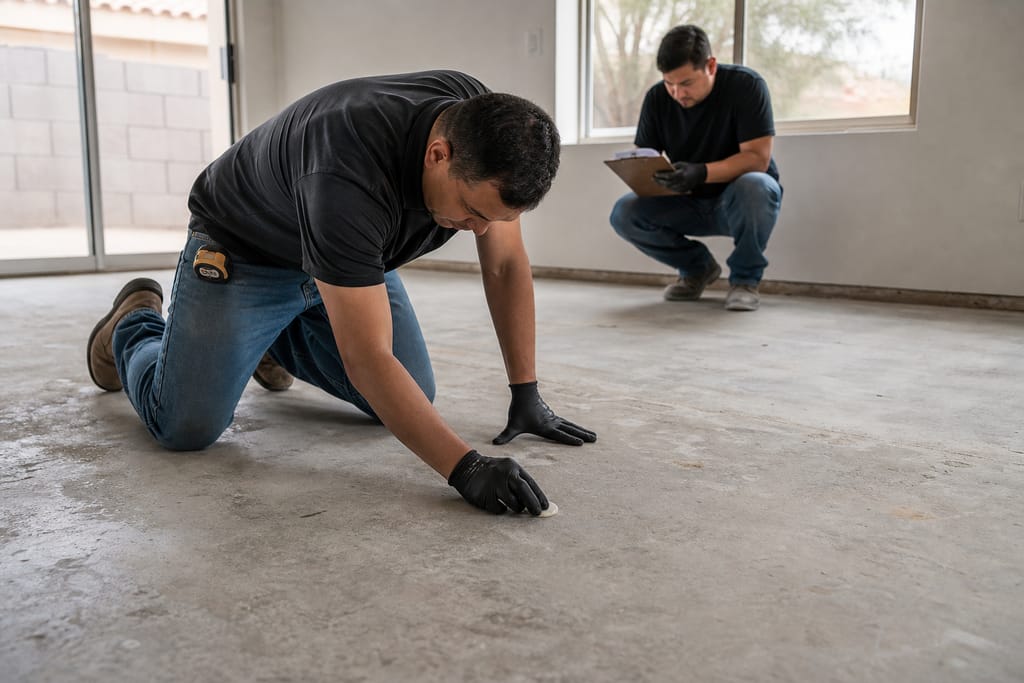 Step 1
Surface Evaluation
The concrete slab is assessed for porosity and prior coatings before prep begins.
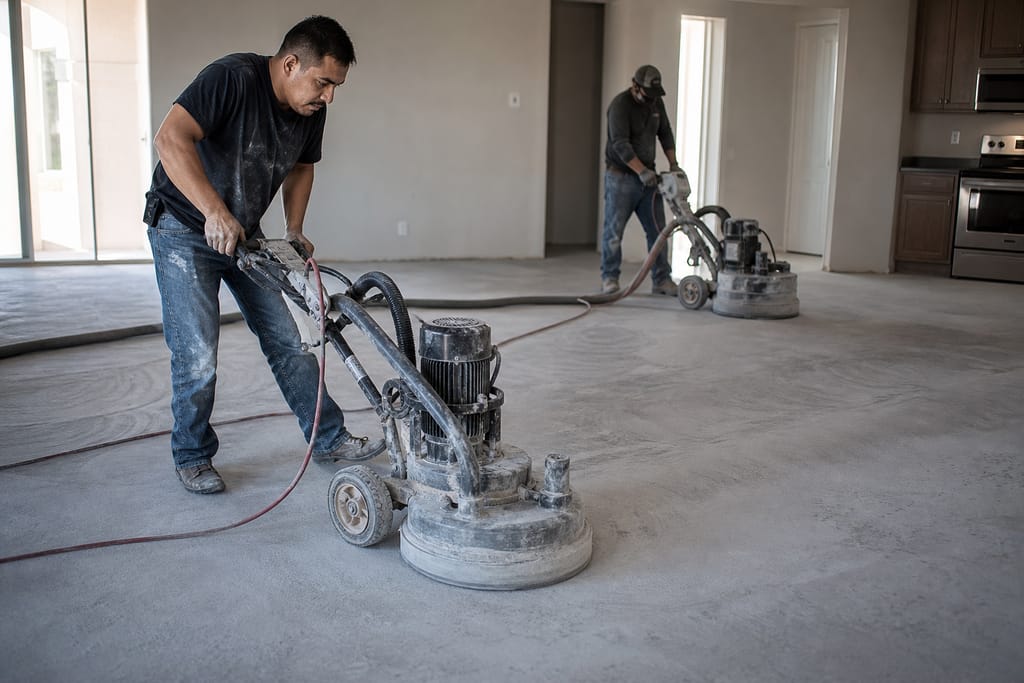 Step 2
Diamond Grinding Prep
Grinding removes surface contaminants and creates texture for strong adhesion.
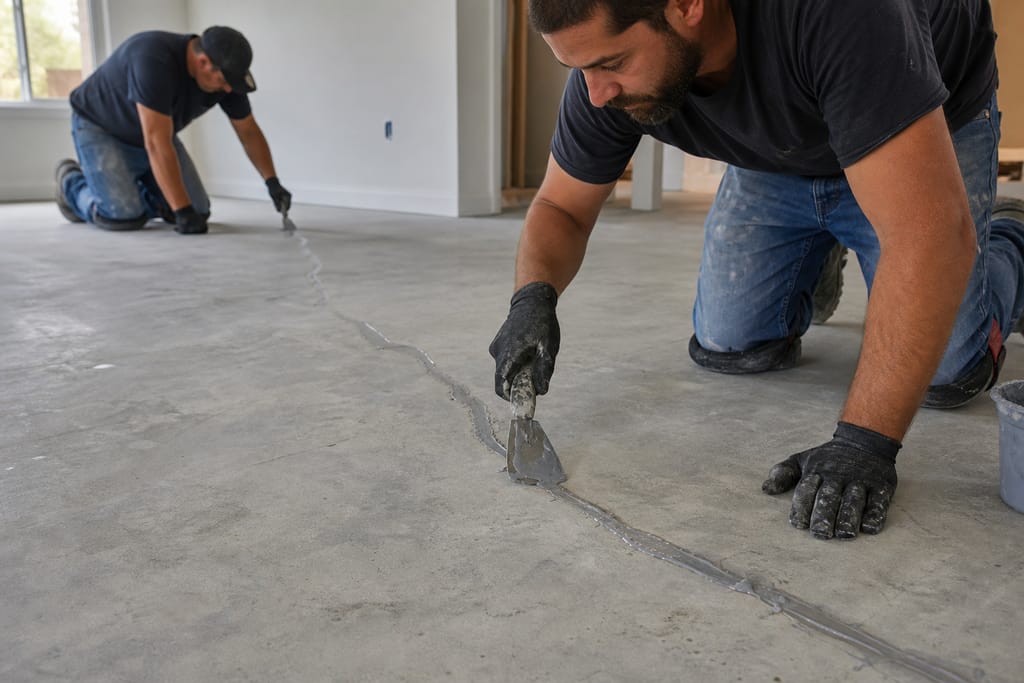 Step 3
Crack & Joint Treatment
Cracks and joints are sealed to prevent future movement beneath the coating.
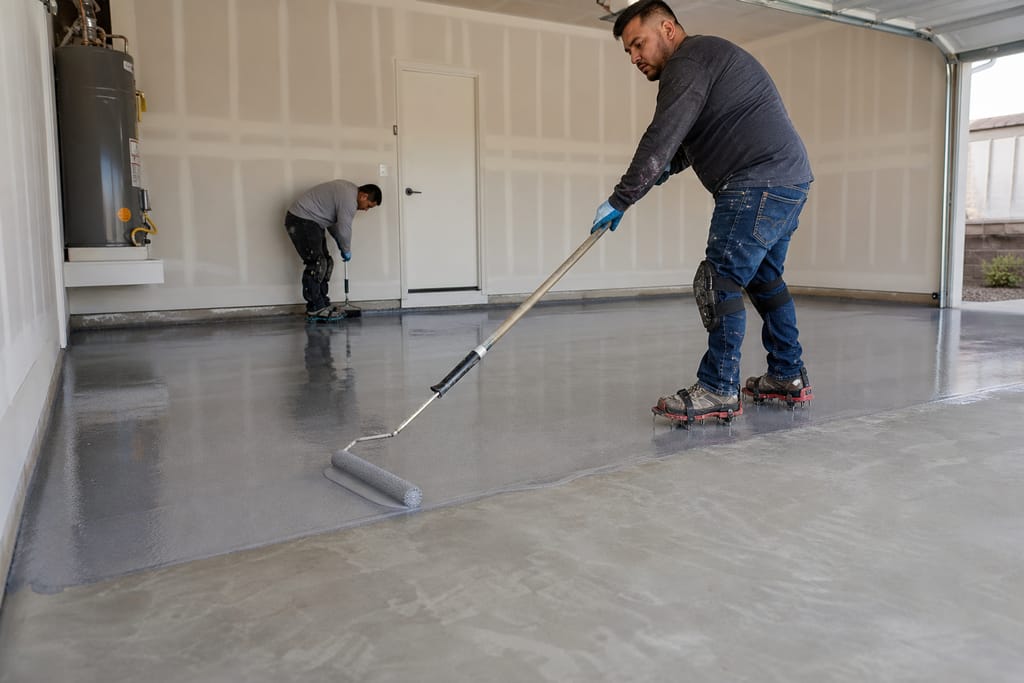 Step 4
Fast-Set Base Coat
A quick-curing base layer is applied to speed up the overall installation timeline.
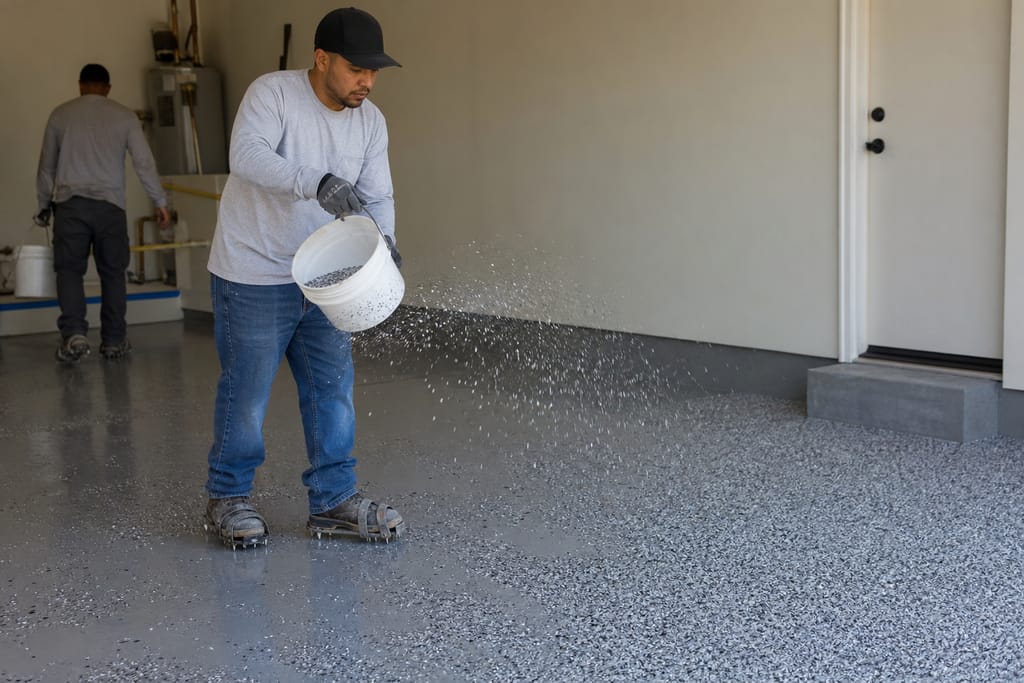 Step 5
Flake or Color Broadcast
Decorative chips or color flakes are broadcast into the wet coating if desired.
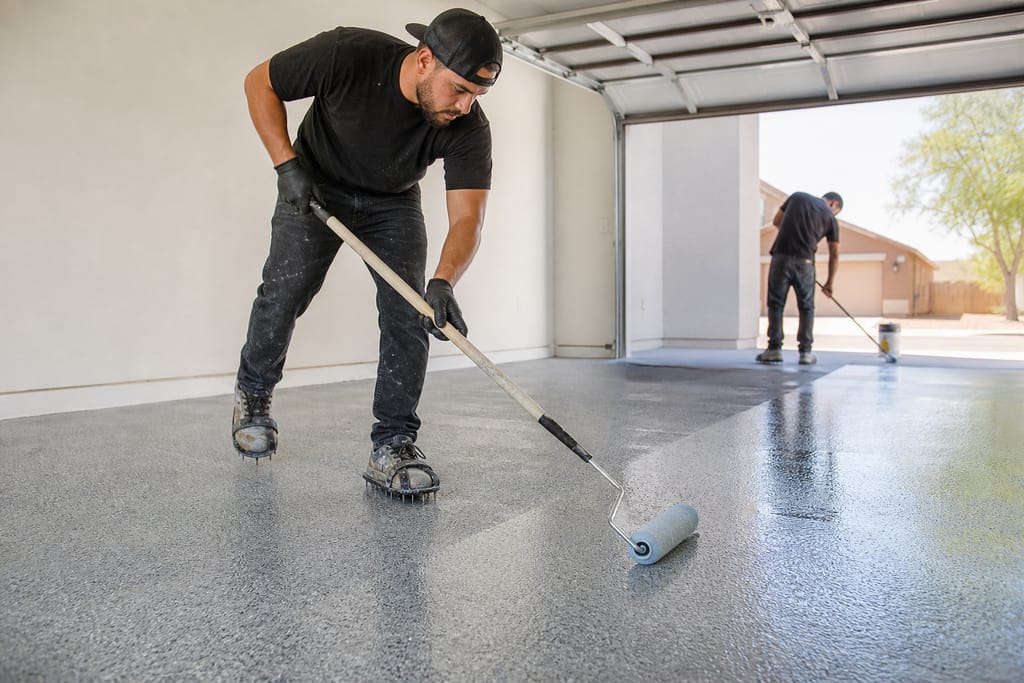 Step 6
Rapid Cure Topcoat
A fast-curing topcoat is applied, allowing the floor to be used within hours.
Materials
Materials and Methods for Polyaspartic Floor Coatings
Glendale slabs spend long stretches of the year above typical epoxy application temperatures, so material choice here isn't cosmetic.
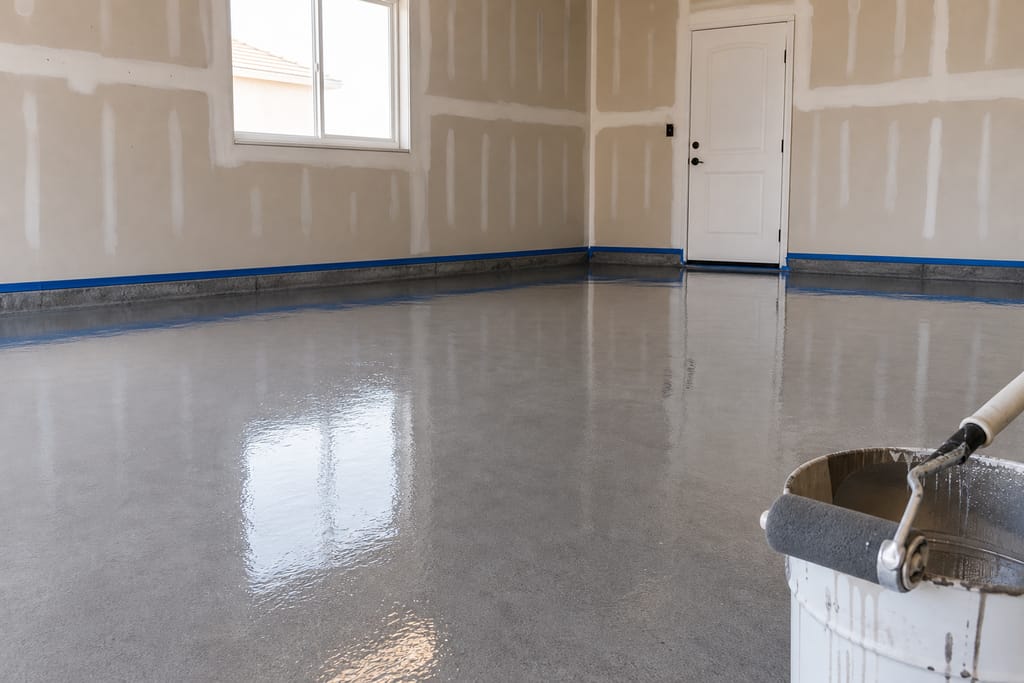
Polyaspartic Resin Coating
A fast-reacting resin provides durability with minimal downtime, which matters when a Glendale garage sits uncovered against full summer sun most of the day.
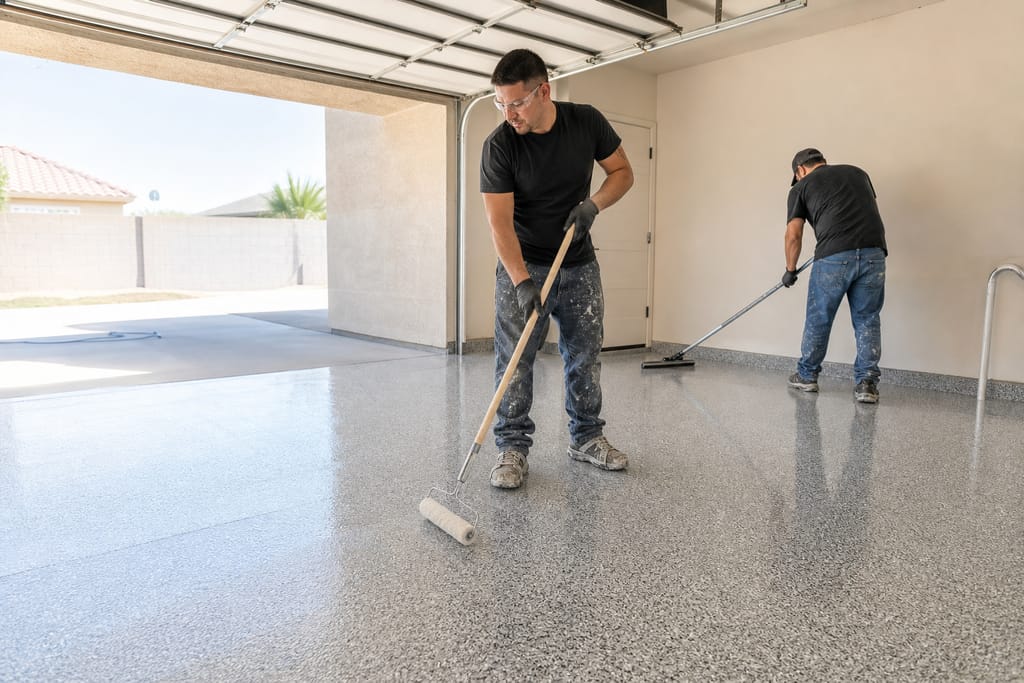
UV-Resistant Topcoat
A topcoat resists fading and yellowing even in direct sunlight, holding color on south-facing driveways and patios longer than standard epoxy.
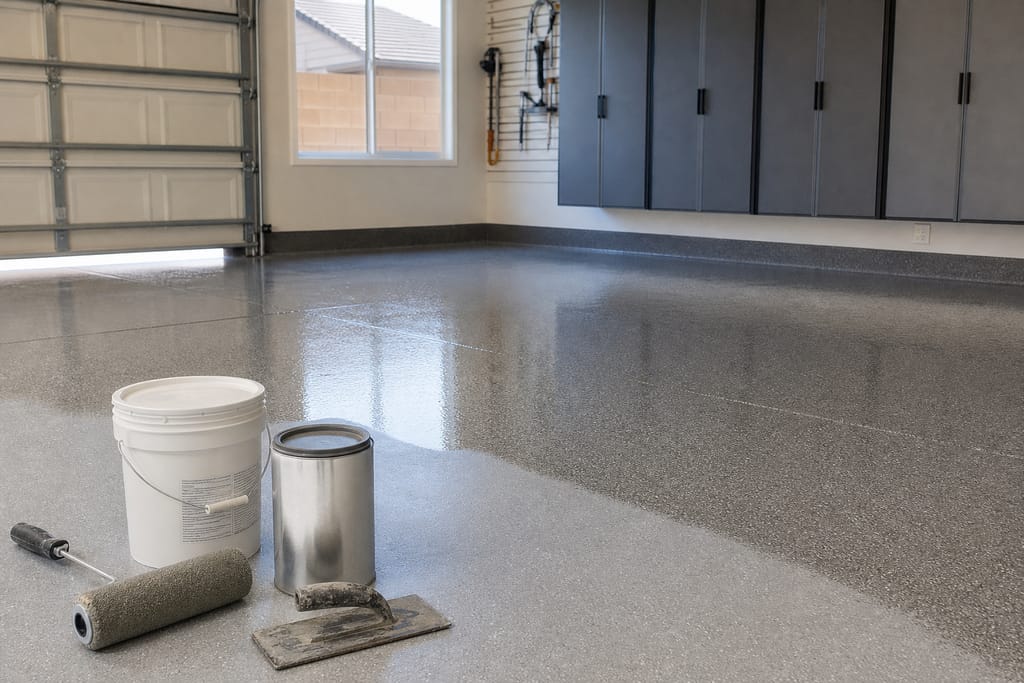
Rapid Hardener Blend
A hardening compound accelerates cure speed so the floor is usable the same day, useful when a job has to finish before a heat spike the next afternoon.
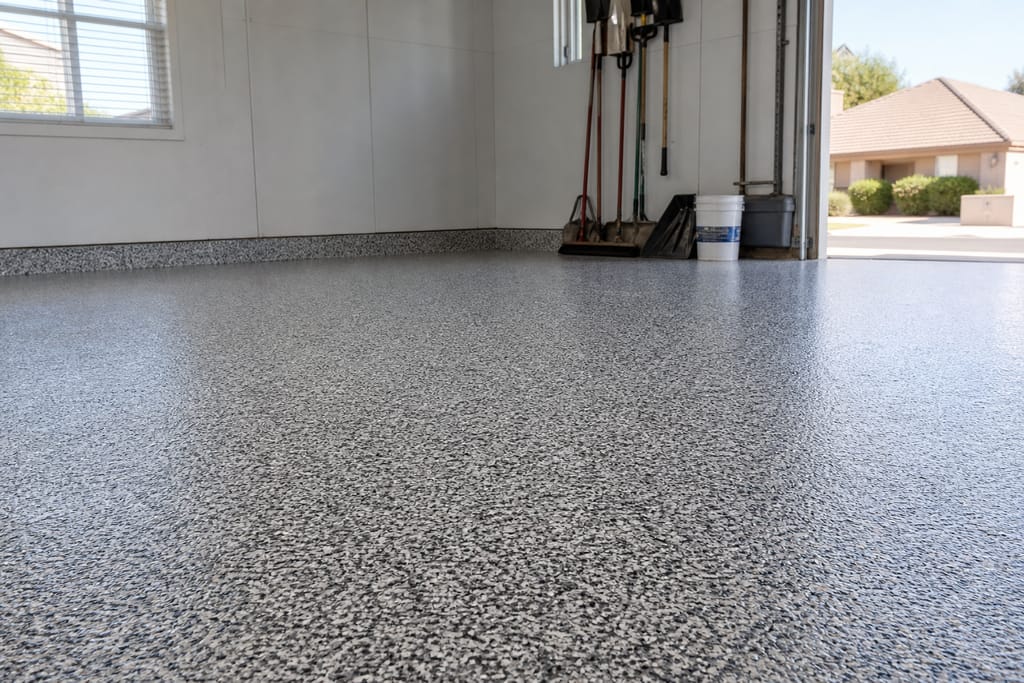
Decorative Quartz Blend
Quartz granules add texture and slip resistance, a practical upgrade for entryways that track in monsoon-season dust.
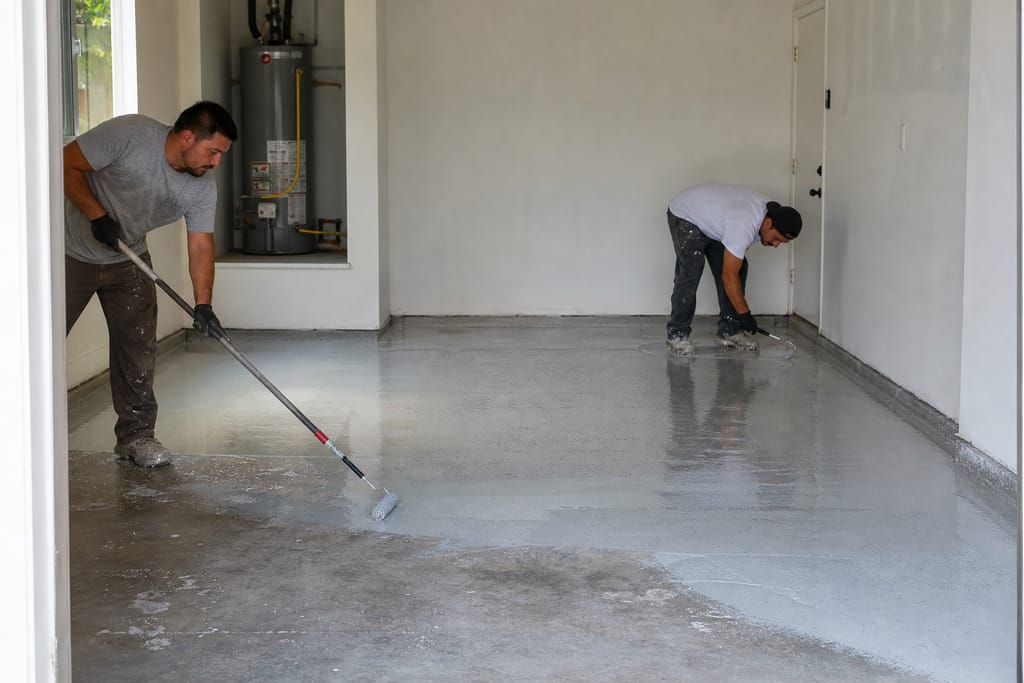
Low-VOC Formula
A low-odor formula cuts fumes during application, important for attached garages where the smell can drift into the house.
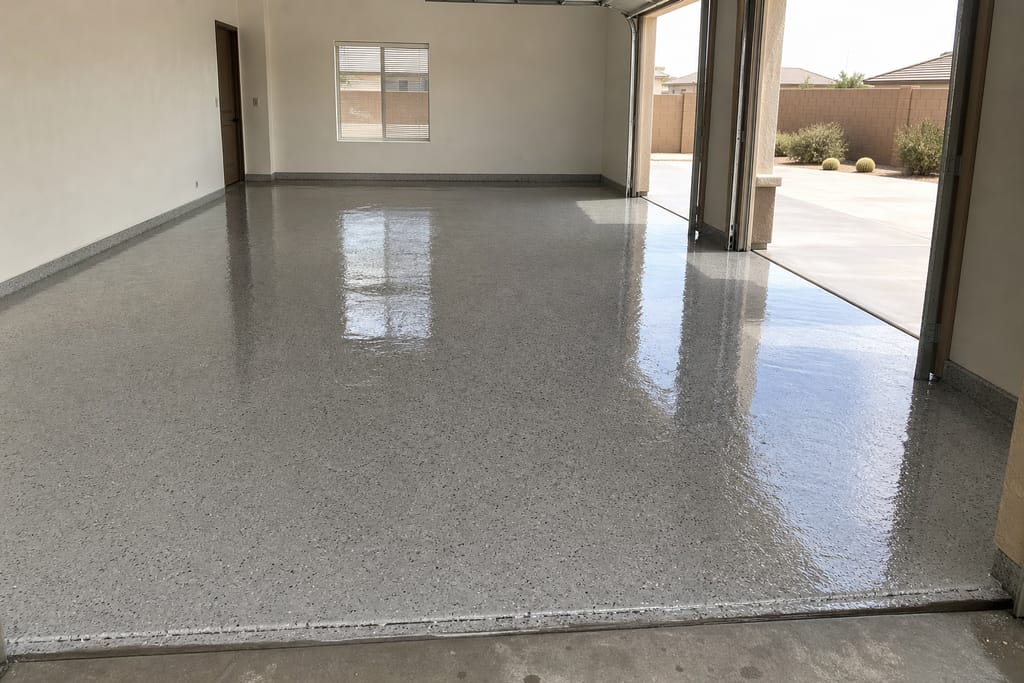
Temperature-Flexible Coating
A coating formulated to cure effectively across a wide temperature range, giving more flexibility to schedule around Glendale's hot afternoons and cooler mornings.
Questions on materials?
Get a Free EstimateTimeline
How Long Does a Polyaspartic Floor Coatings Project Take?
A polyaspartic job moves faster than most coating projects because the chemistry does the heavy lifting on cure time.
- 01
Consult and assessment
same day - 02
Grinding and crack repair
1 day - 03
Base coat and broadcast
1 day - 04
Topcoat application and cure
4–8 hours - 05
Walk-on ready
same day - 06
Drive-on ready
24–48 hours
Need a schedule that fits?
Get a Free EstimateCodes & permits
Permits and Codes for Polyaspartic Floor Coatings in Glendale
Permit rules can vary by project scope. Check with the City of Glendale or Maricopa County before work starts if you're unsure.
| Typically needs a permit | Often no permit |
|---|---|
| Structural slab repair tied to foundation movement | Cosmetic garage floor coating over existing sound concrete |
| — | Patio or walkway polyaspartic resurfacing |
| — | Minor crack filling ahead of coating |
Need help with permits?
Get a Free EstimateDIY vs pro
DIY vs Hiring a Pro for Polyaspartic Floor Coatings
| DIY | Hire a pro |
|---|---|
| Workable for a small, low-traffic storage area if you're comfortable with tight timing | Professional-grade polyaspartic sets in minutes once catalyzed, so a crew with practiced technique can cover a full garage before the batch kicks off |
| Hardware-store polyaspartic kits exist, but pot life runs short once mixed | A solo DIYer working alone often can't spread the material fast enough before it starts setting up in the tray, leaving lap marks and uneven thickness |
| — | Pros use calibrated mixing ratios and application tools matched to Glendale's ambient temperature swings, which keeps the chemistry on schedule |
Not sure DIY vs pro?
Get a Free EstimateWhen to call
When to Call for Polyaspartic Floor Coatings
Call Glendale Epoxy Pros or request a free estimate to get a fast-cure plan built around your schedule.
- You need a garage or patio back in use within a day or two, not a week
- An existing epoxy coating has started yellowing from sun exposure
- You're coating during peak summer and worried about cure timing
- A previous DIY attempt showed lap lines or uneven texture
Seeing warning signs?
Get a Free EstimateFAQs
Polyaspartic Floor Coatings FAQs
How soon can I walk on a polyaspartic coated floor?
Most polyaspartic topcoats are walkable within a few hours of application, much faster than standard epoxy, which often needs a full day or more.
What's the difference between epoxy and polyaspartic coatings?
Epoxy cures through evaporation and chemical reaction over a longer window, while polyaspartic cures through a fast chemical reaction that's largely unaffected by humidity and finishes in hours instead of days.
Is polyaspartic more expensive than epoxy?
Typically. The faster cure and better UV stability come at a premium per square foot, but the shorter downtime often offsets that for homeowners who need the space back quickly.
Can polyaspartic go over an existing epoxy floor?
Only if the old coating is properly ground and the surface is sound. Peeling or delaminating epoxy needs to be removed first.
Does polyaspartic yellow in Arizona sun?
It resists yellowing far better than standard epoxy, which is why it's a common recommendation for garages with south- or west-facing doors that take direct sun daily.
Is DIY polyaspartic a good idea?
It's riskier than DIY epoxy because the working window is so short. Once the material starts to set, there's no fixing uneven spots, which is why most polyaspartic jobs in Glendale go to a crew experienced with the timing.
More services
Other Epoxy Flooring services
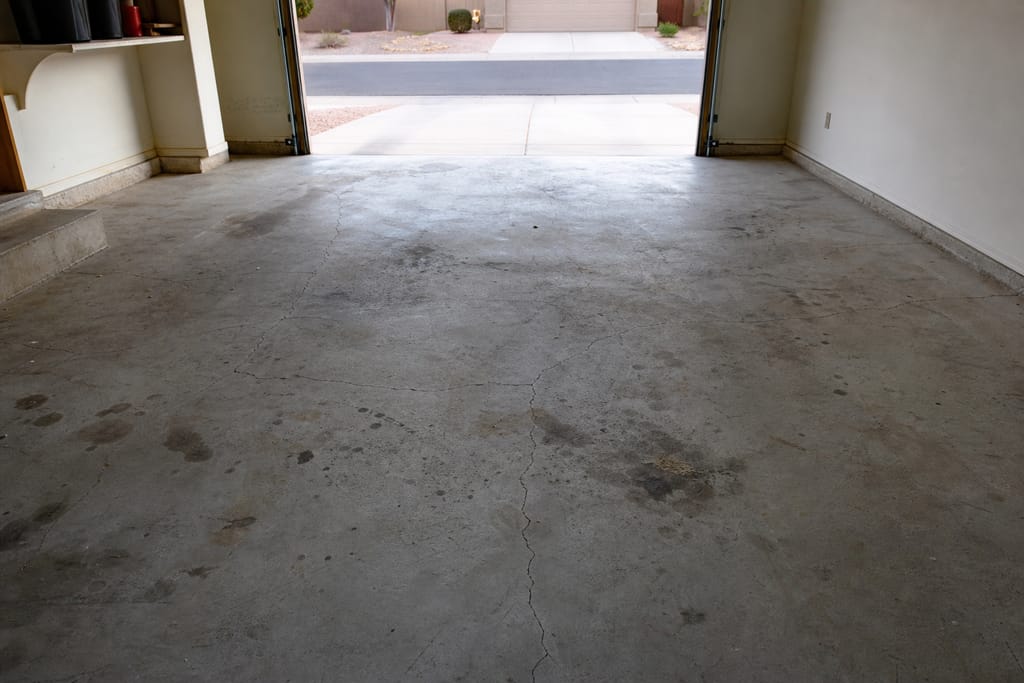
Garage Floor Epoxy Coatings
Garage floor epoxy coatings in Glendale, AZ with grind-first prep and heat-tolerant finishes. Free estimates, no hot-tire pickup.
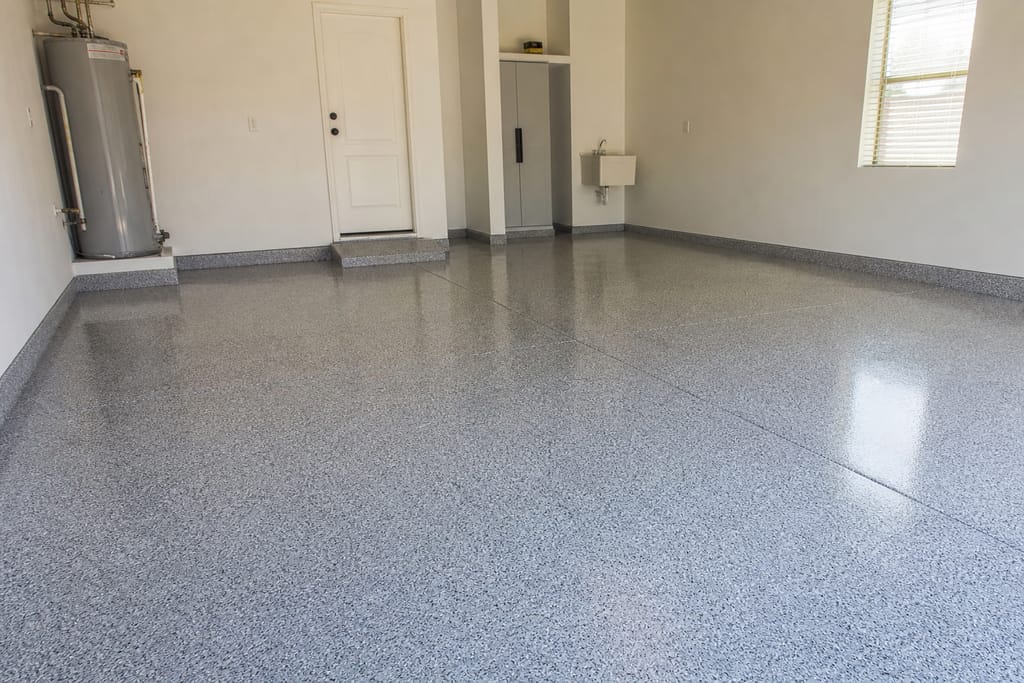
Epoxy Floor Coatings
Epoxy floor coatings for Glendale homes and businesses, UV-stable topcoats and self-leveling options. Free estimates available.
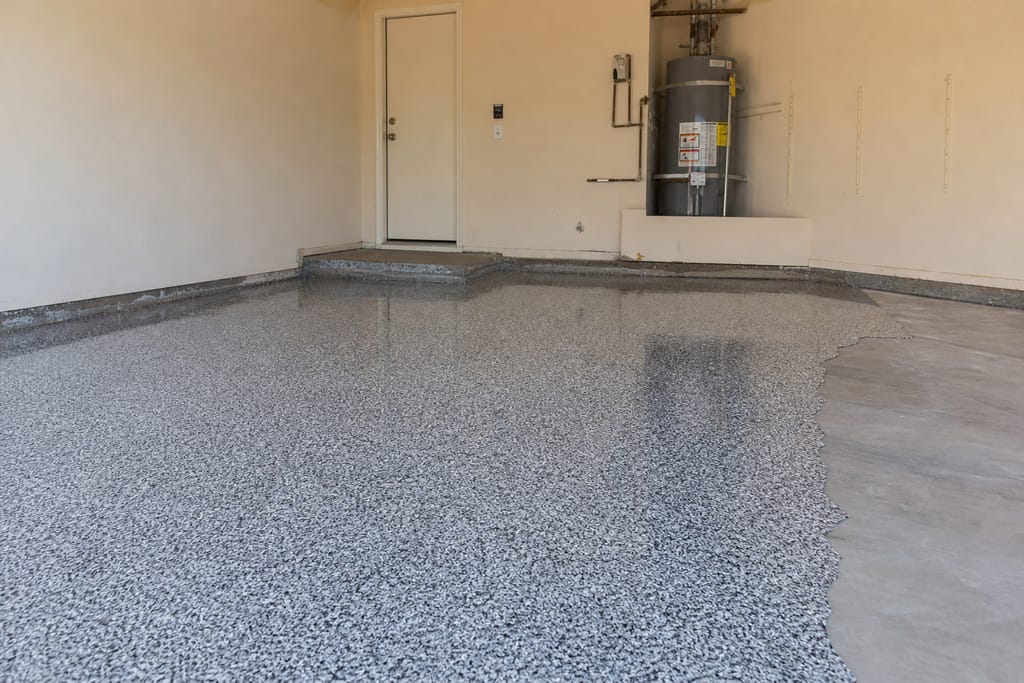
Polyurea Floor Coatings
Flexible polyurea floor coatings for Glendale, AZ slabs with thermal movement. Fast cure, crack-bridging, free estimates.
Ask about Polyaspartic Floor Coatings
Tell us about the project and how to reach you.