Glendale Epoxy Pros
Concrete Floor Leveling in Glendale, AZ
Professional concrete floor leveling in Glendale, AZ for uneven or settled slabs before coating. Self-leveling compound systems. Free estimates.
- 15+ Years local experience
- 500+ Projects completed
- Licensed & Insured
Serving Glendale and nearby communities.
An epoxy or polyaspartic coating only looks as good as the slab underneath it. If a garage floor slopes, dips, or has settled unevenly, that coating will telegraph every low spot once it's down. Concrete floor leveling fixes that before any color or topcoat goes on.
Glendale Epoxy Pros handles leveling work as its own step, separate from the coating itself, because the two jobs need different materials and timing. Glendale's mix of older original-pour slabs and newer tract-home pours means some floors need a light skim coat and others need a full self-leveling pour to get flat.
What's included
What's Included with Concrete Floor Leveling
Typically included: elevation survey, surface cleaning, self-leveling compound pour, smoothing and finishing.
Optional: fiber-reinforced mix for slabs with active minor cracking, bonding primer for older concrete.
Customer prep: clear the area completely, including shelving and parked vehicles, before the crew arrives.
Want a clearer scope?
Get a Free EstimateHow it works
How Our Concrete Floor Leveling Process Works
 Step 1
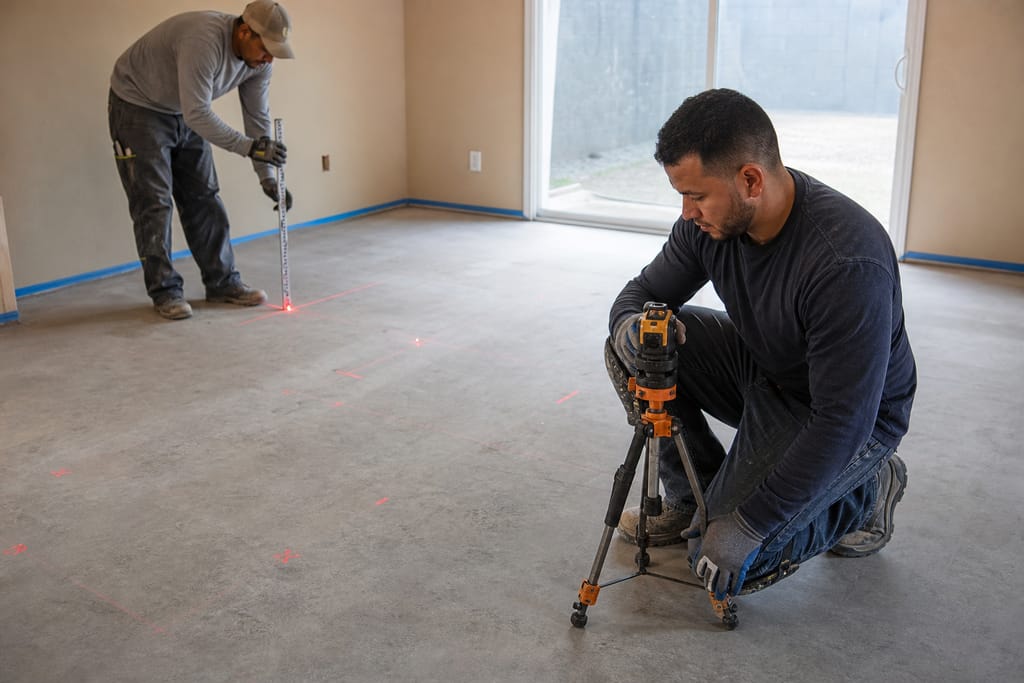
Floor Elevation Survey
A survey identifies low spots and height variations across the slab.
 Step 2
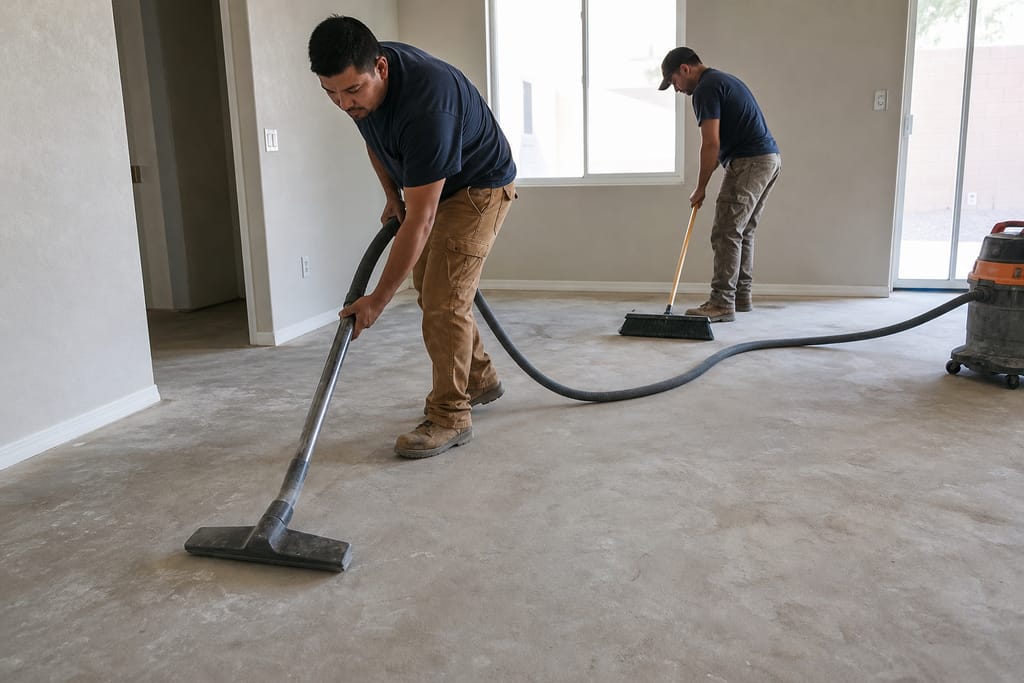
Surface Cleaning
Dust and debris are removed to allow leveling compound to bond properly.
 Step 3
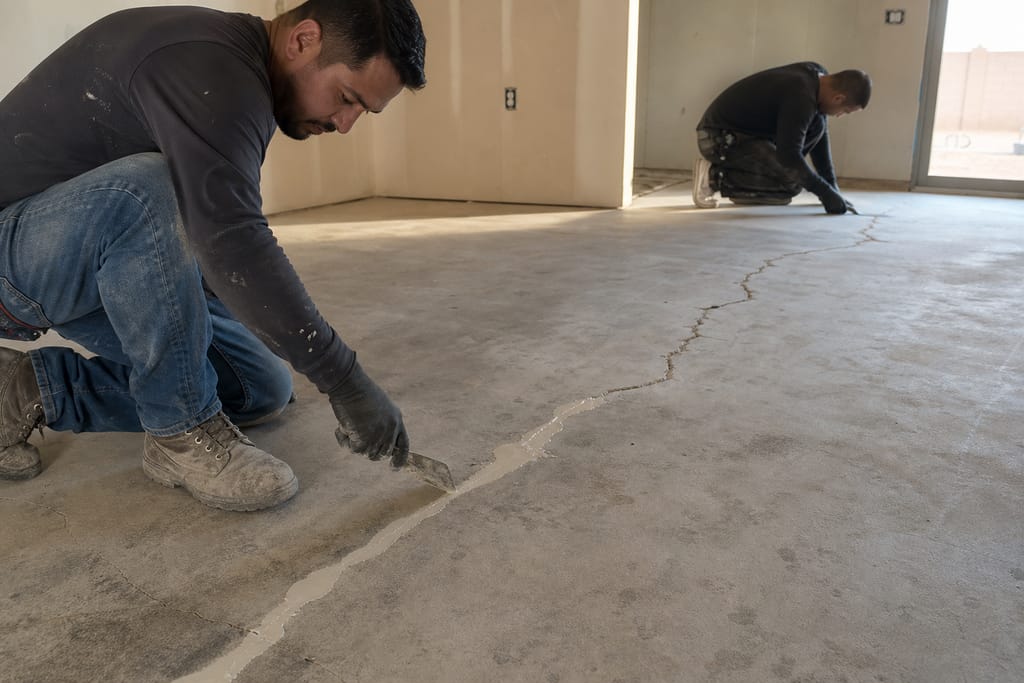
Crack Pre-Treatment
Existing cracks are addressed before leveling material is poured.
 Step 4
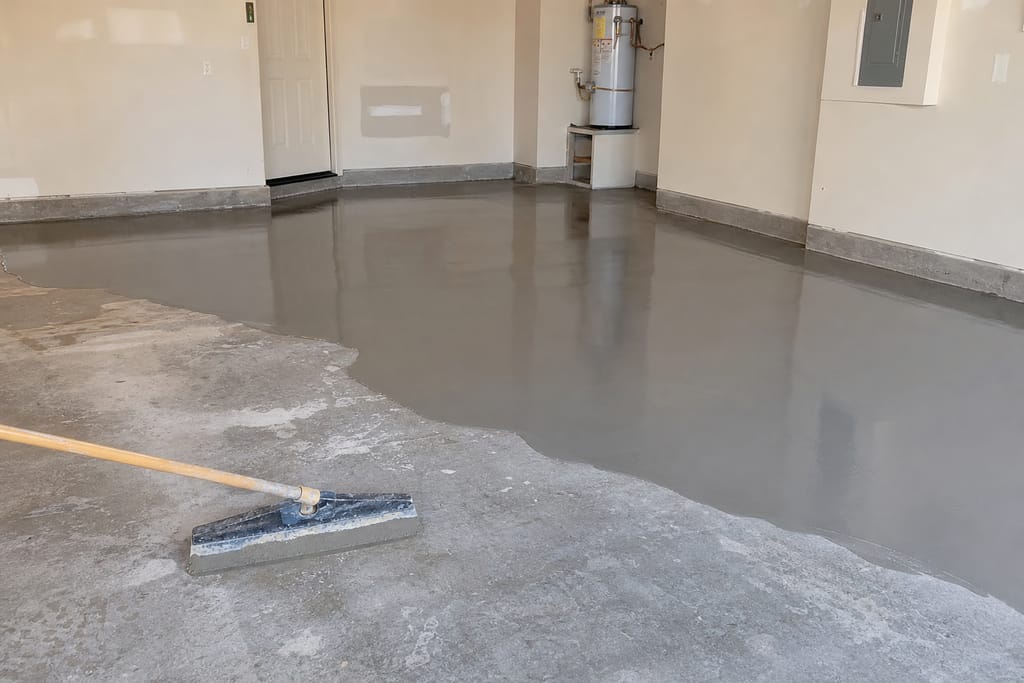
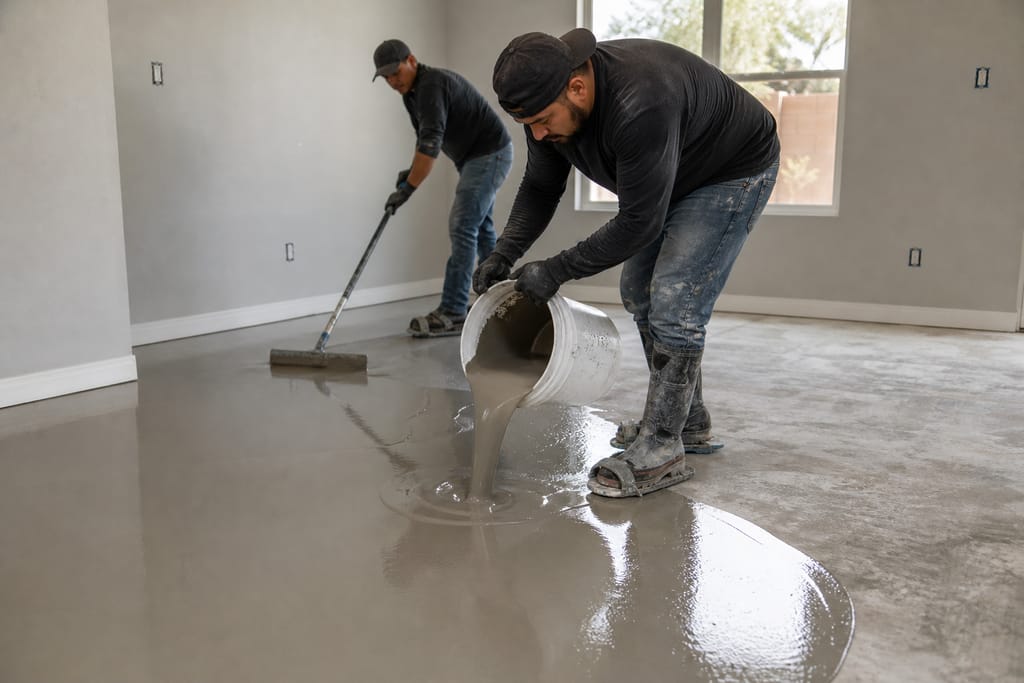
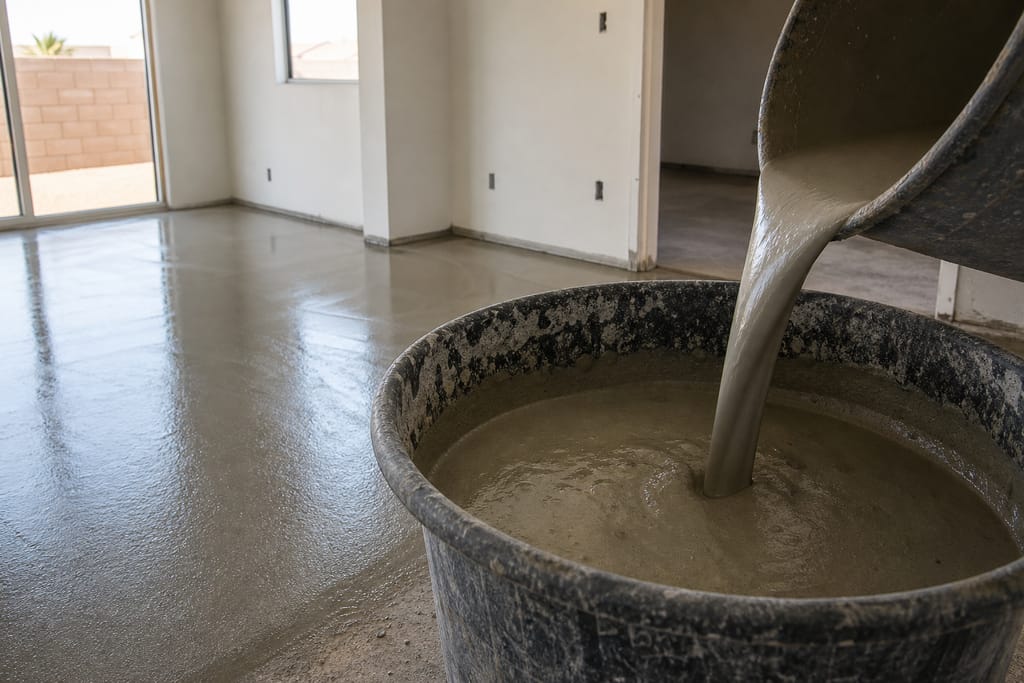
Self-Leveling Pour
A self-leveling compound is poured and spread across uneven areas.
 Step 5
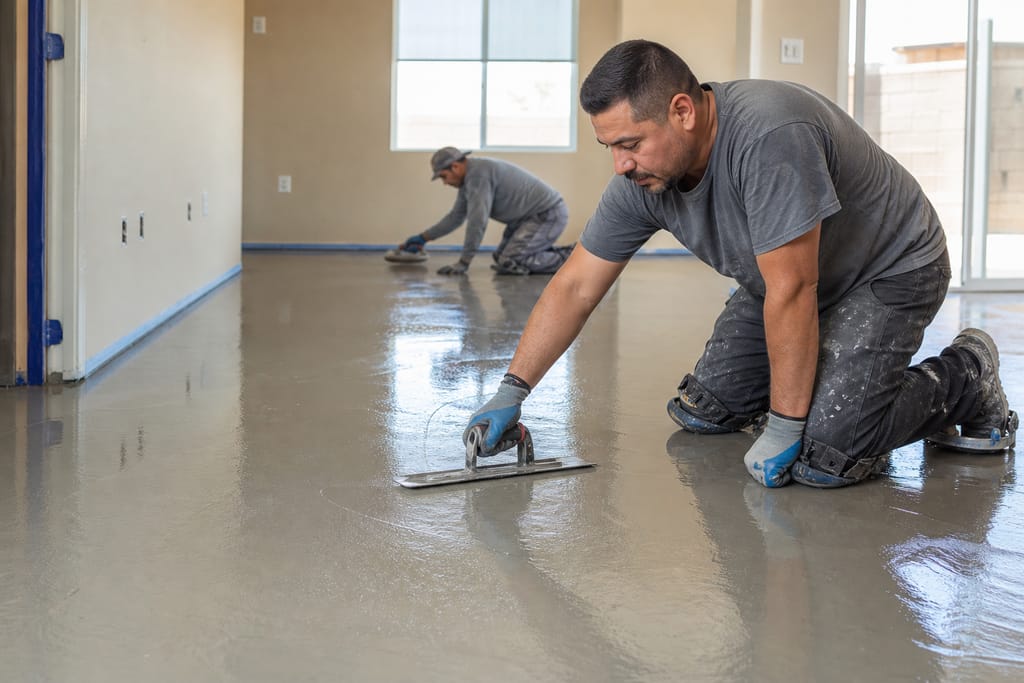
Smoothing & Finishing
The leveling compound is smoothed to achieve a flat, uniform surface.
 Step 6
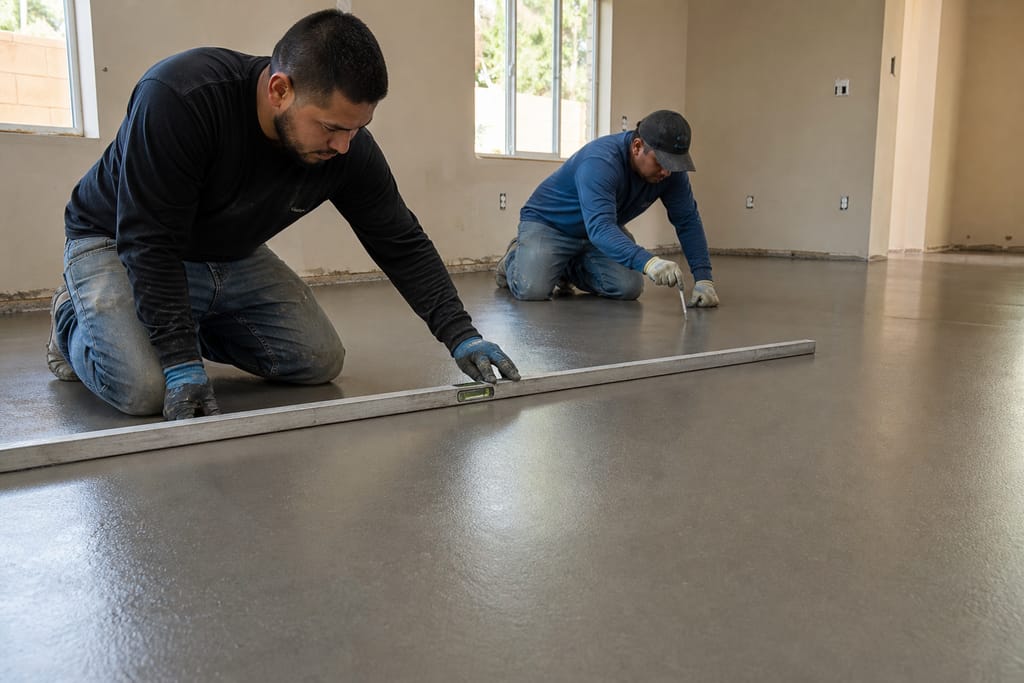
Cure Time & Inspection
The leveled floor is left to cure and then inspected for flatness.
Materials
Materials and Methods for Concrete Floor Leveling
Older Glendale slabs that have settled over decades need different handling than a newer pour with a shallow dip.
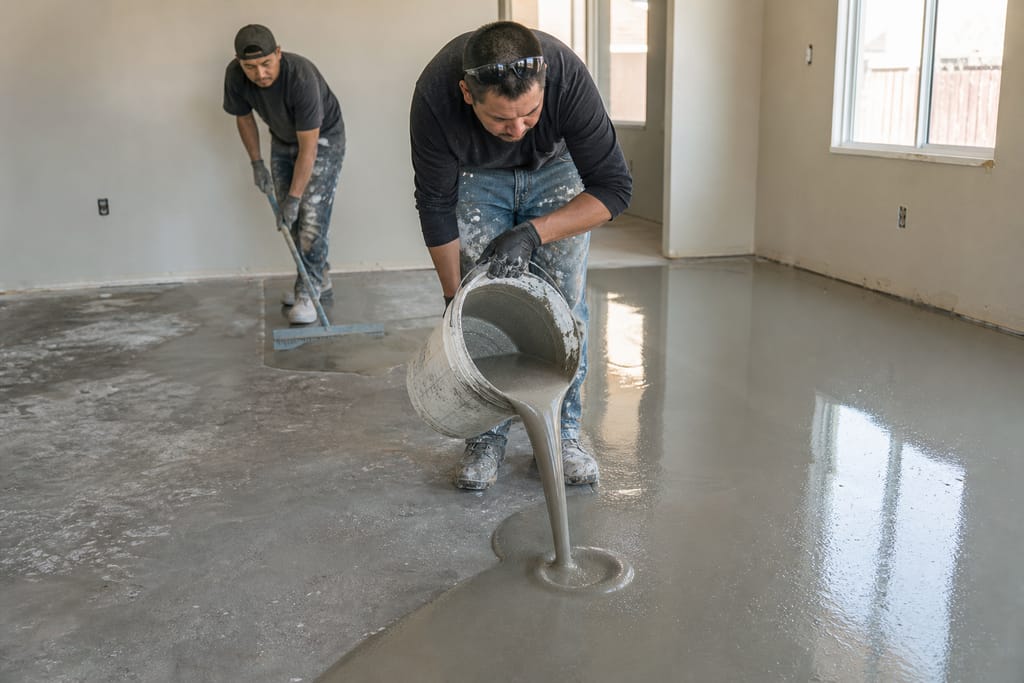
Self-Leveling Underlayment
A flowable compound fills low spots and creates a flat substrate, the standard fix for garages built before more consistent pour standards took hold.
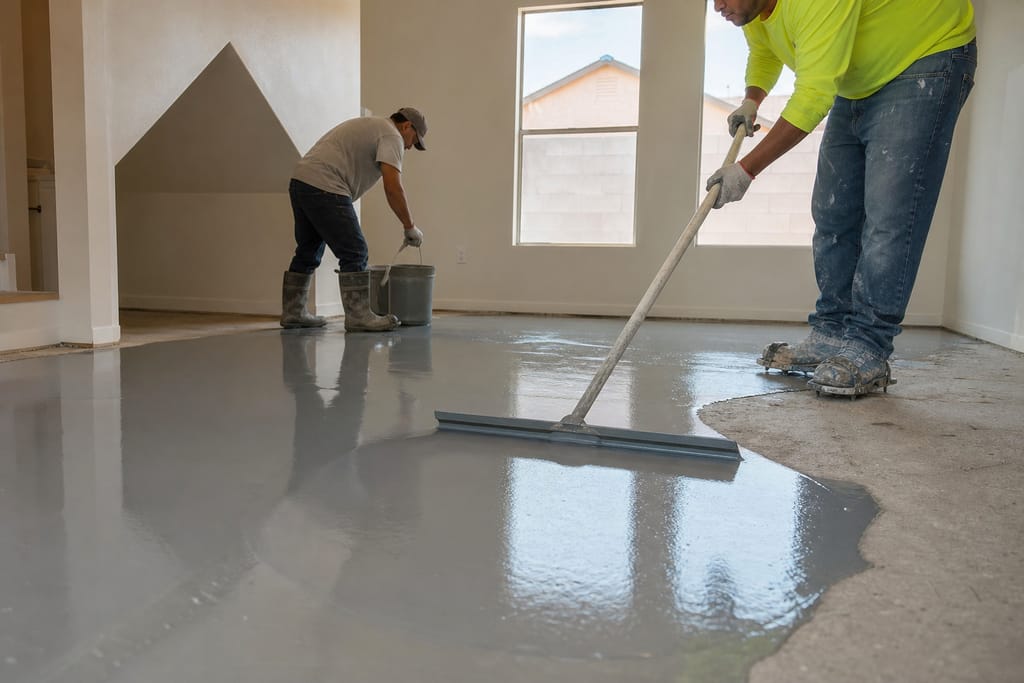
Fast-Setting Leveler
A quick-setting formula reduces downtime between leveling and coating, useful when a job needs to move straight into an epoxy or polyaspartic topcoat.
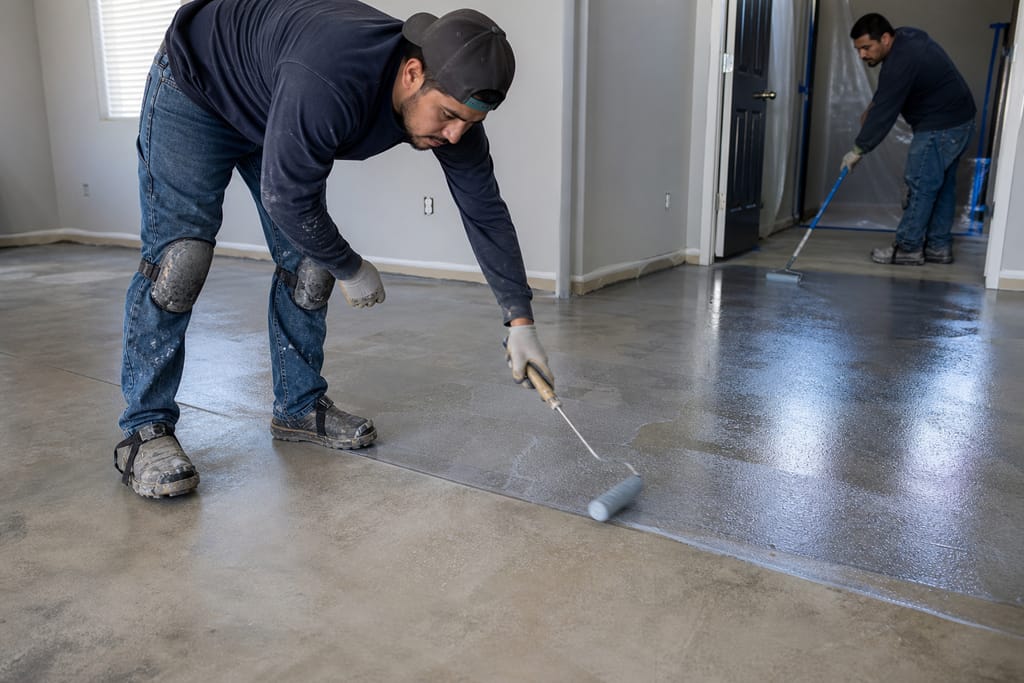
Bonding Primer
A primer improves adhesion between old concrete and new leveling material, important on original-pour slabs that have years of sealer or oil staining baked in.
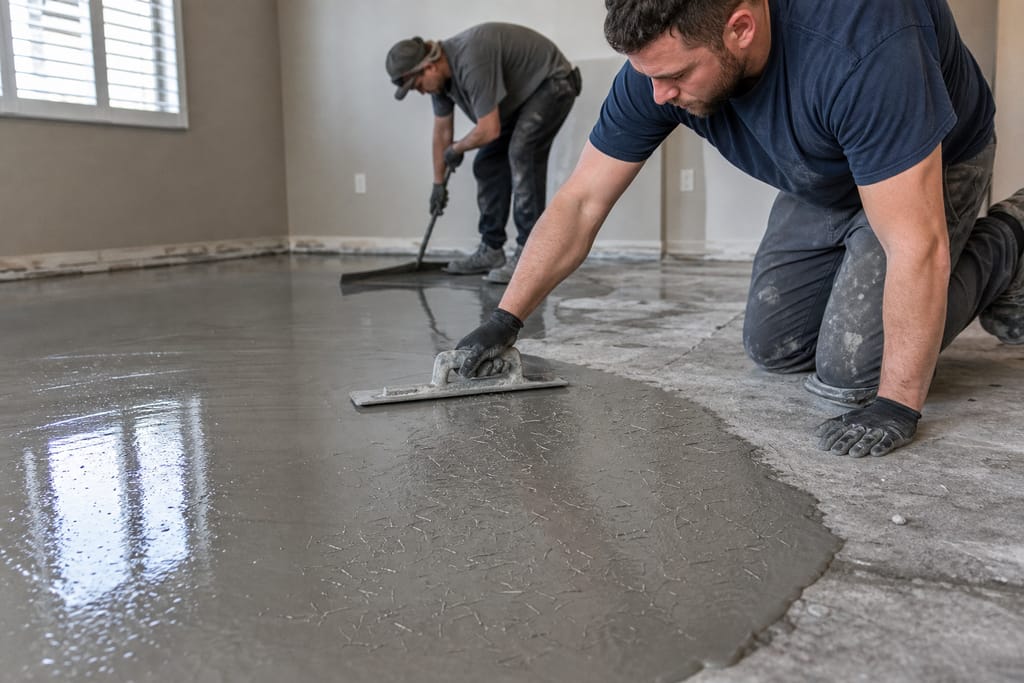
Fiber-Reinforced Compound
Fiber additives increase strength and reduce cracking in the leveling layer, a good match for slabs with minor settling still in progress.
Polymer-Modified Mix
A polymer blend improves flexibility and durability of the leveled surface under Glendale's expansion-contraction cycle between summer and winter.
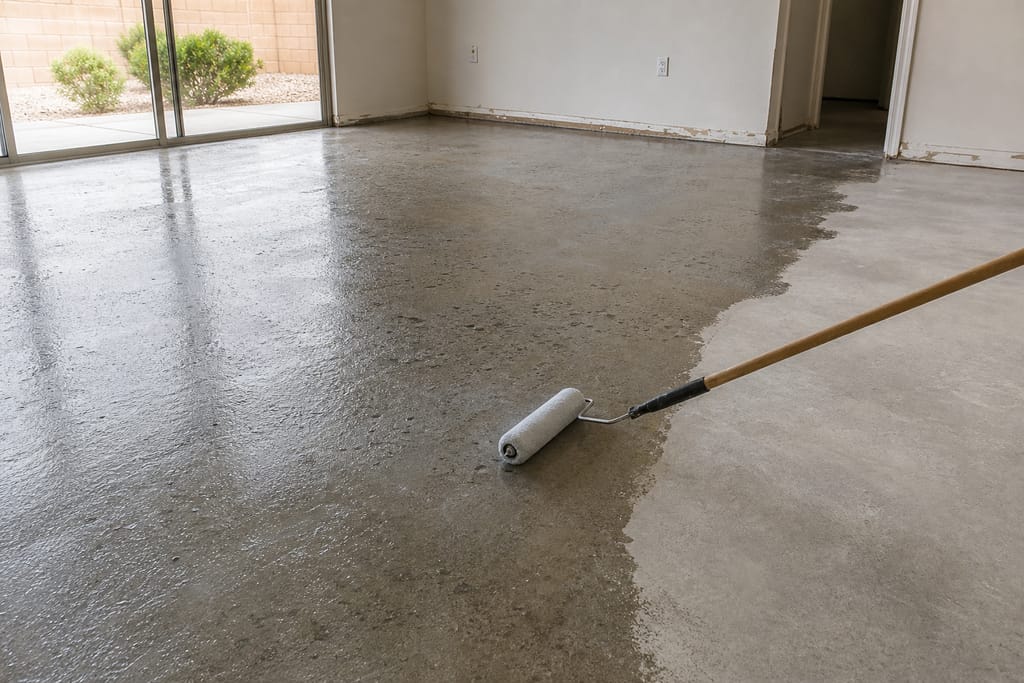
Moisture Mitigation Primer
A primer reduces moisture transmission from the slab into new layers, relevant on older homes where the original vapor barrier may be thin or missing.
Questions on materials?
Get a Free EstimateTimeline
How Long Does a Concrete Floor Leveling Project Take?
Leveling work needs to fully cure before any coating goes on top, so sequencing matters more than speed here.
- 01
Elevation survey and consult
same day - 02
Surface prep and crack treatment
1 day - 03
Self-leveling pour
1 day - 04
Cure before coating
24–72 hoursdepending on pour depth
- 05
Inspection and handoff to coating crew
same dayas cure completes
Need a schedule that fits?
Get a Free EstimateWhen to call
When to Call for Concrete Floor Leveling
Call Glendale Epoxy Pros or request a free estimate to find out if your slab needs leveling before coating.
- Water pools in one corner of the garage instead of draining toward the door
- You can see or feel a noticeable slope walking across the slab
- An old patch job has sunk lower than the surrounding concrete
- A coating estimate came back flagging the slab as too uneven to coat as-is
Seeing warning signs?
Get a Free EstimateFAQs
Concrete Floor Leveling FAQs
Can epoxy fix uneven or sloped garage floors on its own?
Epoxy coatings are thin and follow the existing contour of the slab, so they won't correct a real slope or dip. Leveling has to happen first.
How much does concrete floor leveling cost in Glendale?
Minor skim-coating a small low spot runs a few hundred dollars, while a full self-leveling pour across a garage can run into the low thousands depending on square footage and depth needed. A free estimate gives an exact number for your slab.
Does leveling compound need to cure before coating goes on?
Yes. Most self-leveling compounds need 24 to 72 hours to cure fully before a coating can be applied on top, depending on depth and ambient temperature.
Is DIY concrete leveling a good idea?
It's one of the trickier DIY jobs in this space. Self-leveling compound sets fast once mixed, and getting the ratio and pour technique wrong leaves trapped air bubbles or an uneven surface that shows through the coating later.
Do I need a permit for concrete floor leveling?
Cosmetic leveling ahead of a coating usually doesn't need a permit. If the unevenness is tied to foundation settling or structural movement, that's a different conversation and may need a permit or an engineer's input.
More services
Other Epoxy Flooring services
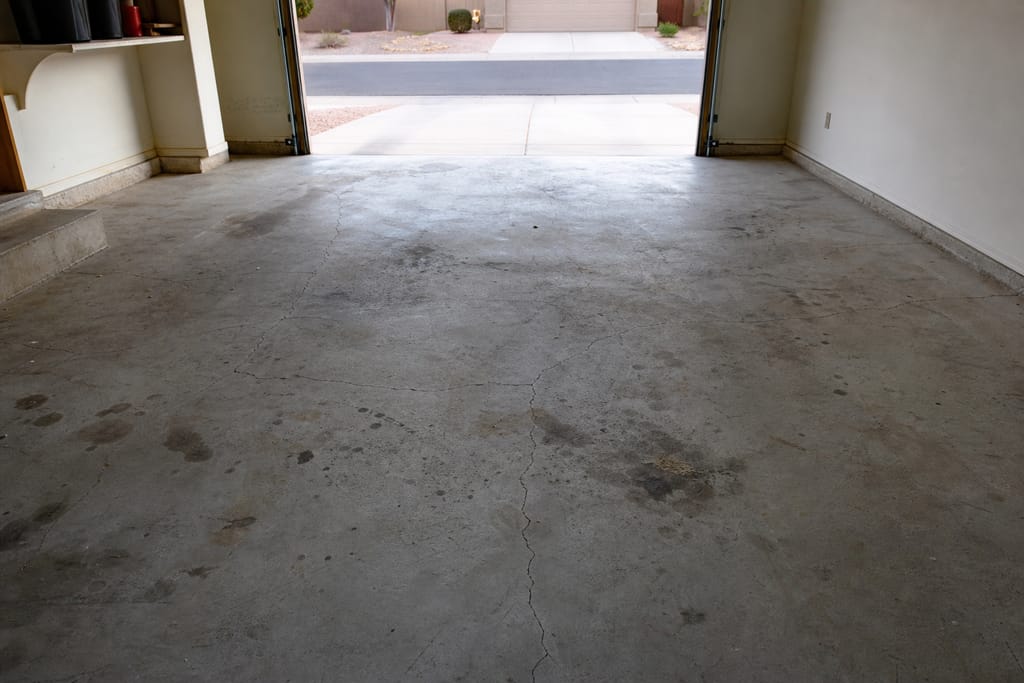
Garage Floor Epoxy Coatings
Garage floor epoxy coatings in Glendale, AZ with grind-first prep and heat-tolerant finishes. Free estimates, no hot-tire pickup.
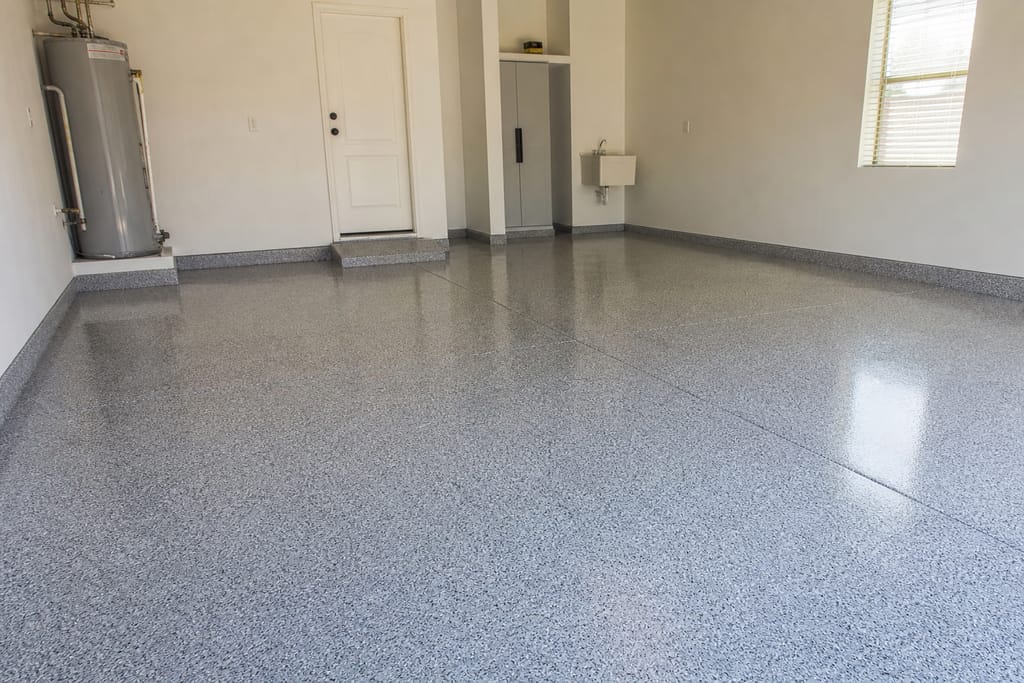
Epoxy Floor Coatings
Epoxy floor coatings for Glendale homes and businesses, UV-stable topcoats and self-leveling options. Free estimates available.
Polyaspartic Floor Coatings
Fast-cure polyaspartic floor coatings in Glendale, AZ. Heat-tolerant, UV-stable finishes with same-day park-ready turnaround. Free estimates.
Ask about Concrete Floor Leveling
Tell us about the project and how to reach you.