Glendale Epoxy Pros
Industrial Floor Coatings in Glendale, AZ
Chemical-resistant industrial floor coatings in Glendale, AZ for process areas, heat exposure, and heavy equipment. Free estimates.
- 15+ Years local experience
- 500+ Projects completed
- Licensed & Insured
Serving Glendale and nearby communities.
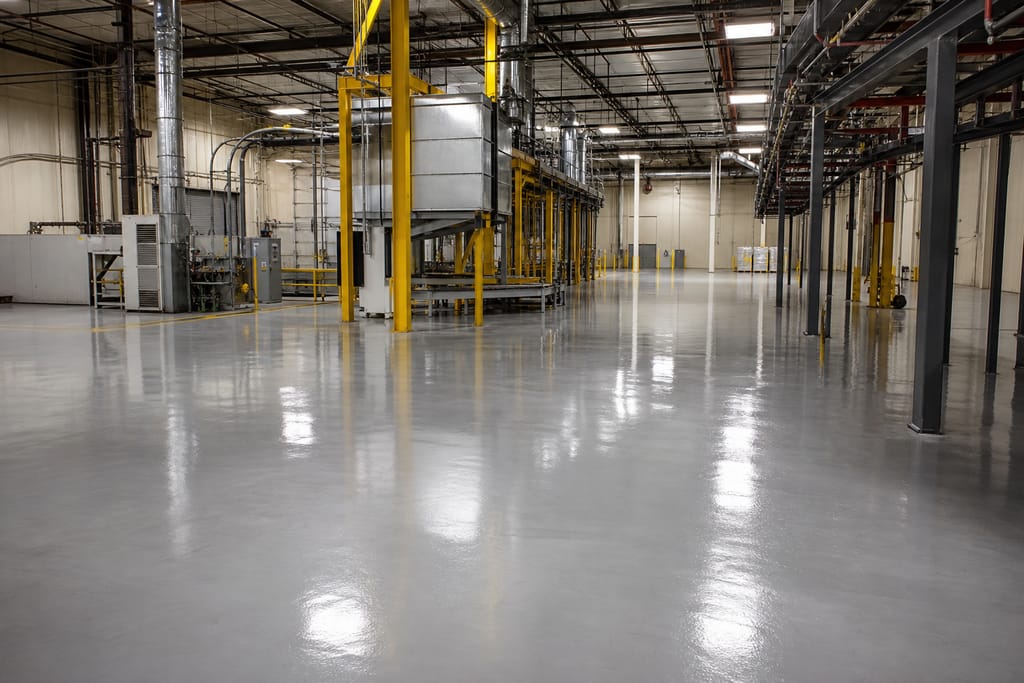
Industrial floors deal with a different kind of stress than a garage or warehouse: acids, solvents, heat near equipment, and constant exposure to whatever a process line spills. A standard epoxy coating breaks down fast under that kind of chemical load, which is why industrial coating systems use specialized primers and resin blends built specifically for it.
Glendale Epoxy Pros builds industrial coating systems around the actual process happening in each area, not a one-size-fits-all install. A floor near a chemical mixing station gets a different system than a floor near a loading bay, and the plan reflects that from the first walkthrough.
What's included
What's Included with Industrial Floor Coatings
Typically included: process area evaluation, aggressive surface prep, chemical-resistant primer, multi-layer coating build-up, containment detailing.
Optional: static-dissipative coating for sensitive zones, extended topcoat for heat-adjacent areas.
Customer prep: coordinate shutdown windows for affected zones and clear equipment or stock from the coating area.
Want a clearer scope?
Get a Free EstimateHow it works
How Our Industrial Floor Coatings Process Works
 Step 1
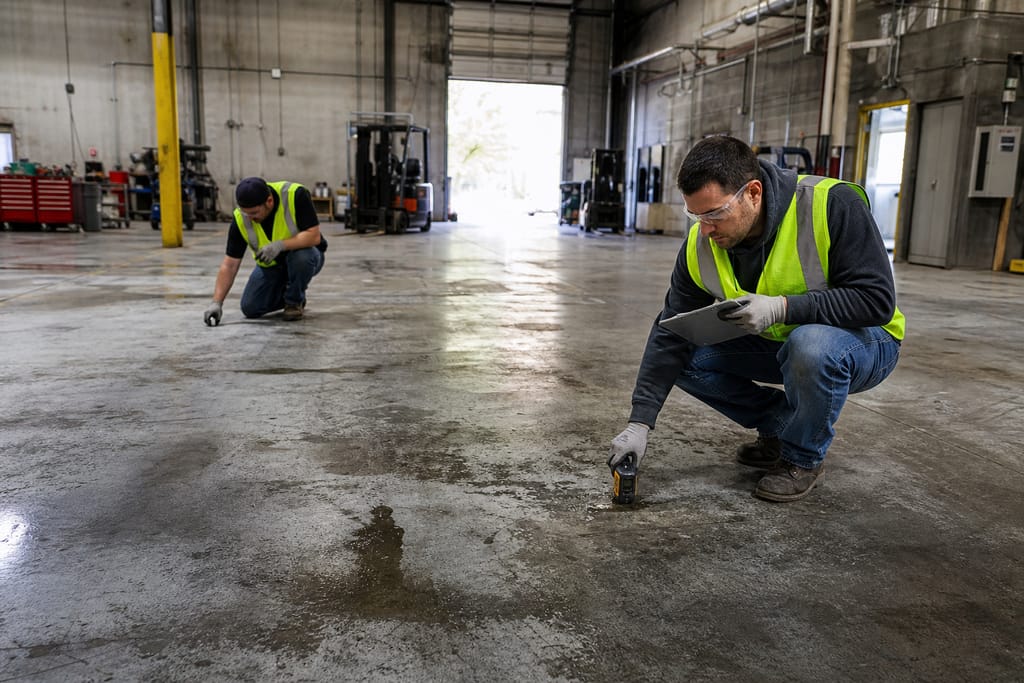
Process Area Evaluation
Each zone is assessed for chemical exposure, heat, and heavy equipment use.
 Step 2
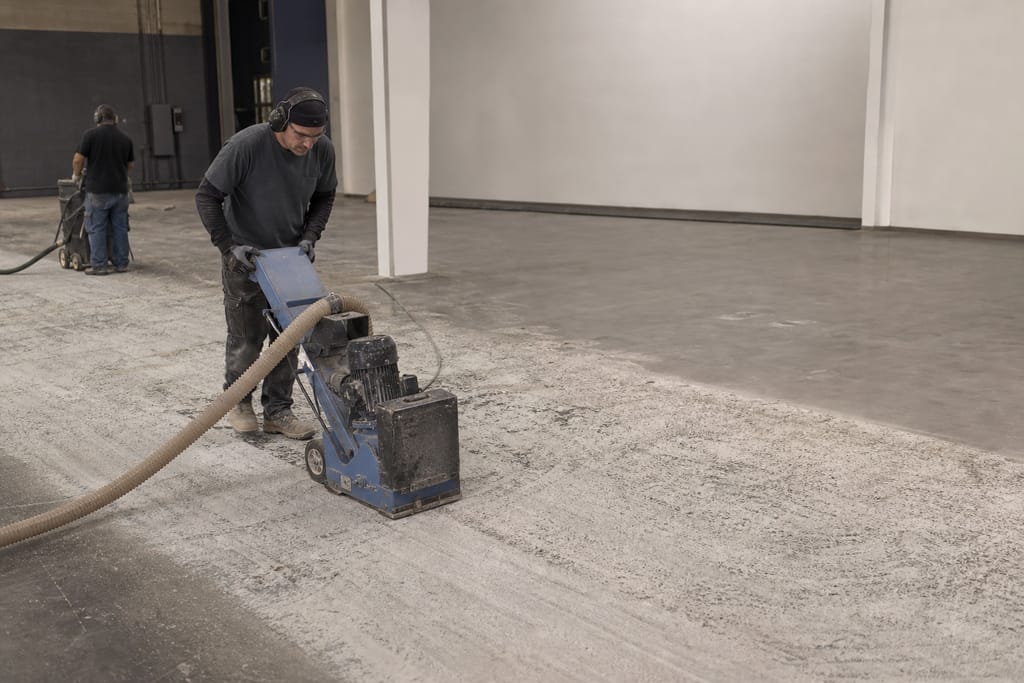
Aggressive Surface Prep
Shot blasting or grinding removes contamination and old coatings thoroughly.
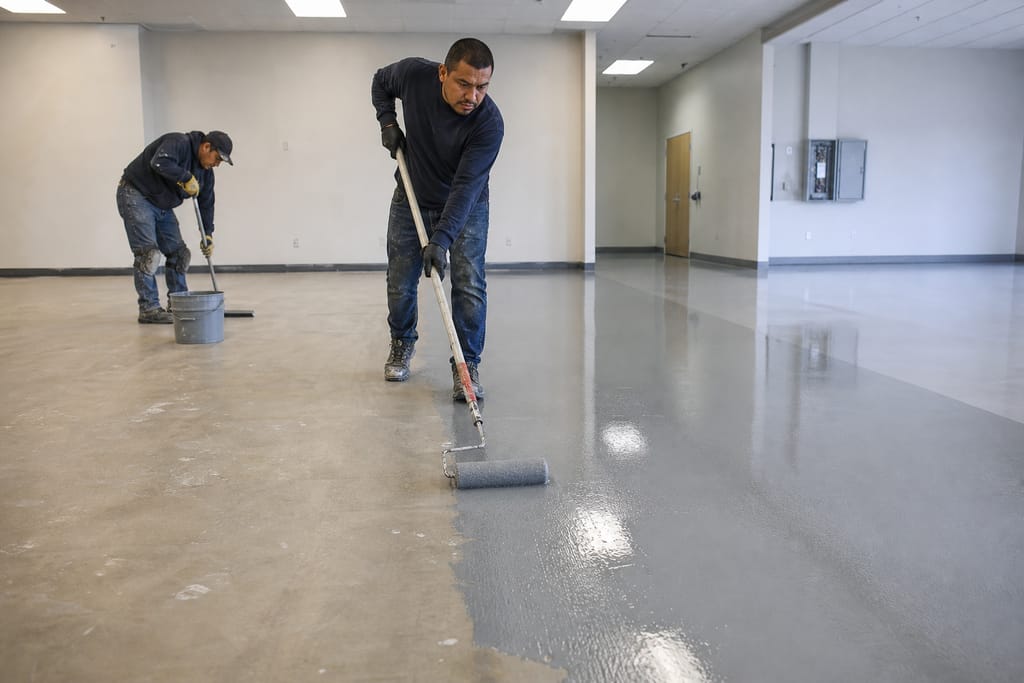 Step 3
Chemical-Resistant Primer
A specialized primer is applied to resist harsh industrial substances.
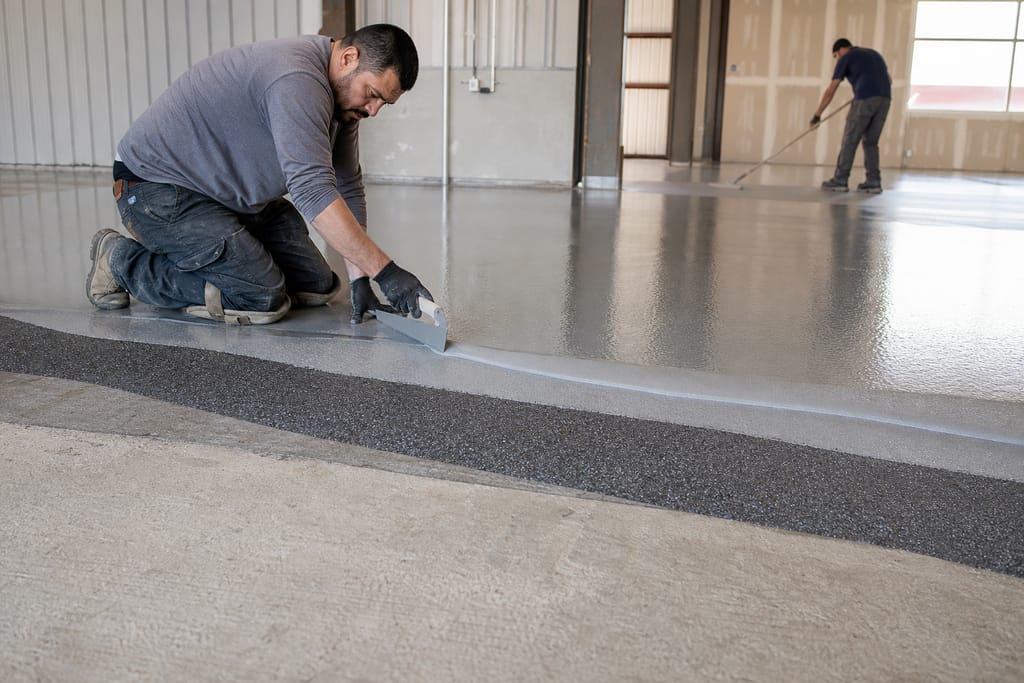 Step 4
Multi-Layer Build-Up
Several coating layers are applied to achieve required thickness and strength.
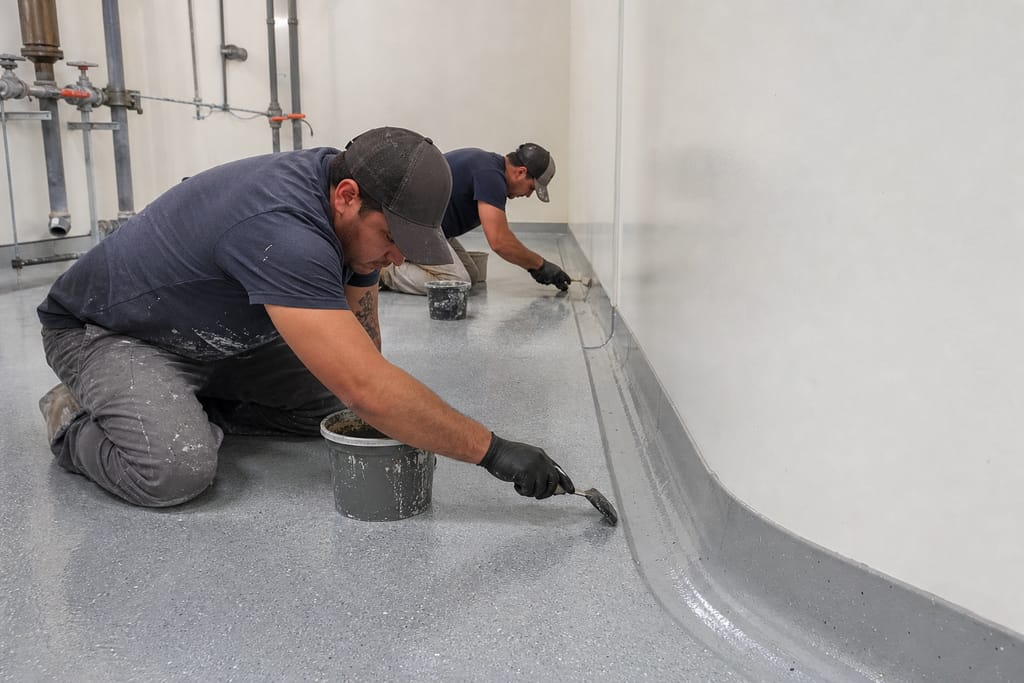 Step 5
Containment Area Detailing
Coved bases and containment zones are detailed for spill control.
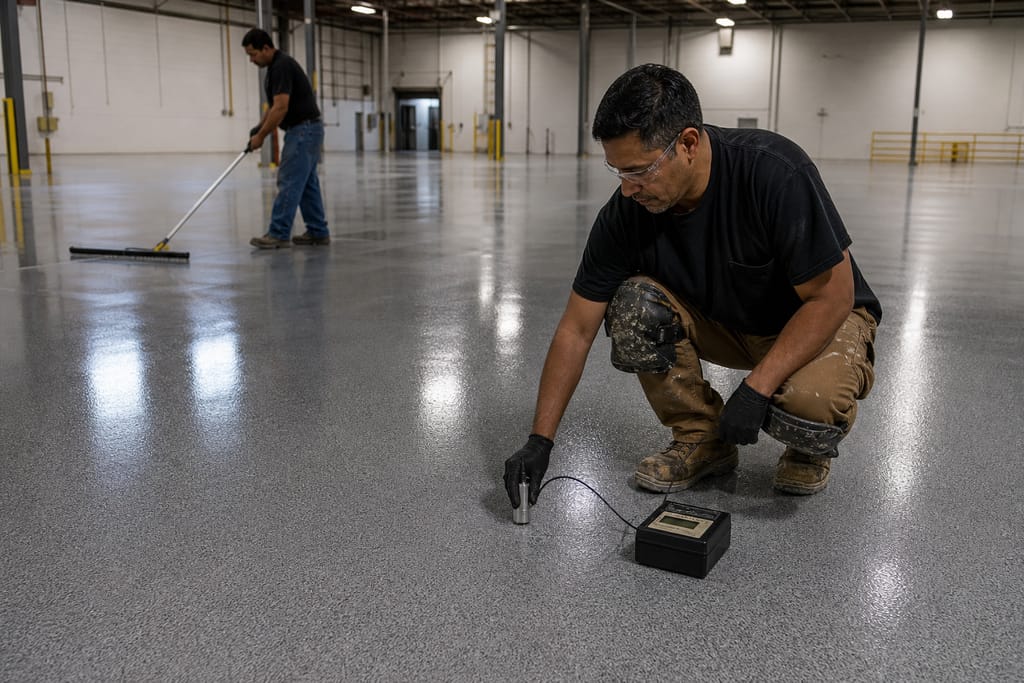 Step 6
Extended Cure & Testing
The system is cured fully and tested before resuming operations.
Materials
Materials and Methods for Industrial Floor Coatings
The chemical exposure and heat load in a typical industrial space go beyond what a garage-grade epoxy system handles, so materials get selected per zone.
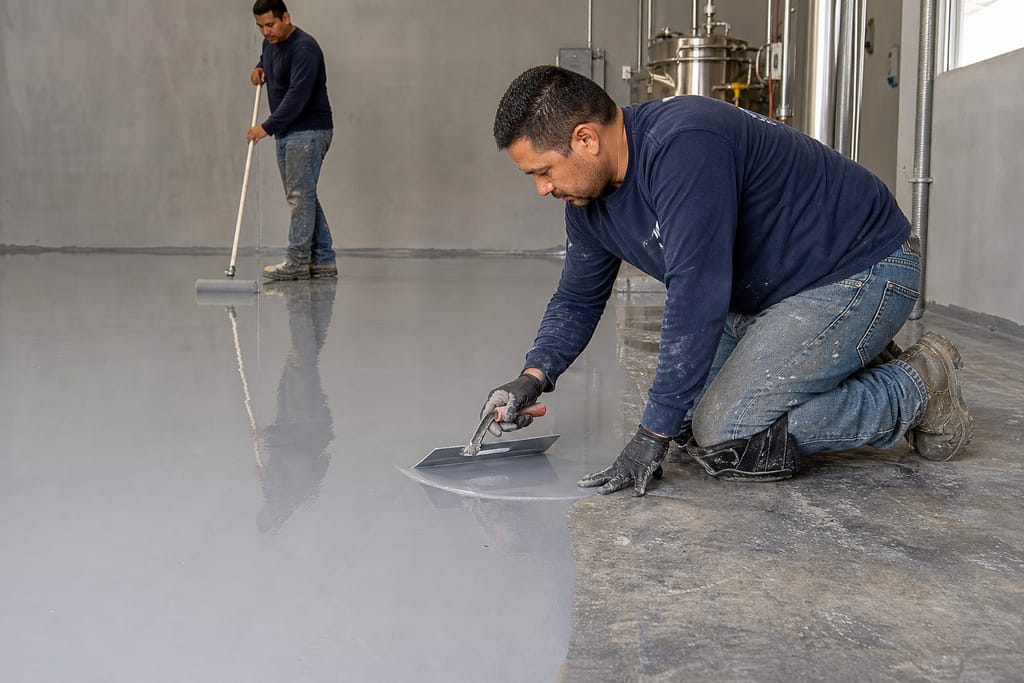
Chemical-Resistant Epoxy
A formula engineered to withstand acids, solvents, and industrial chemicals common in manufacturing and processing environments.
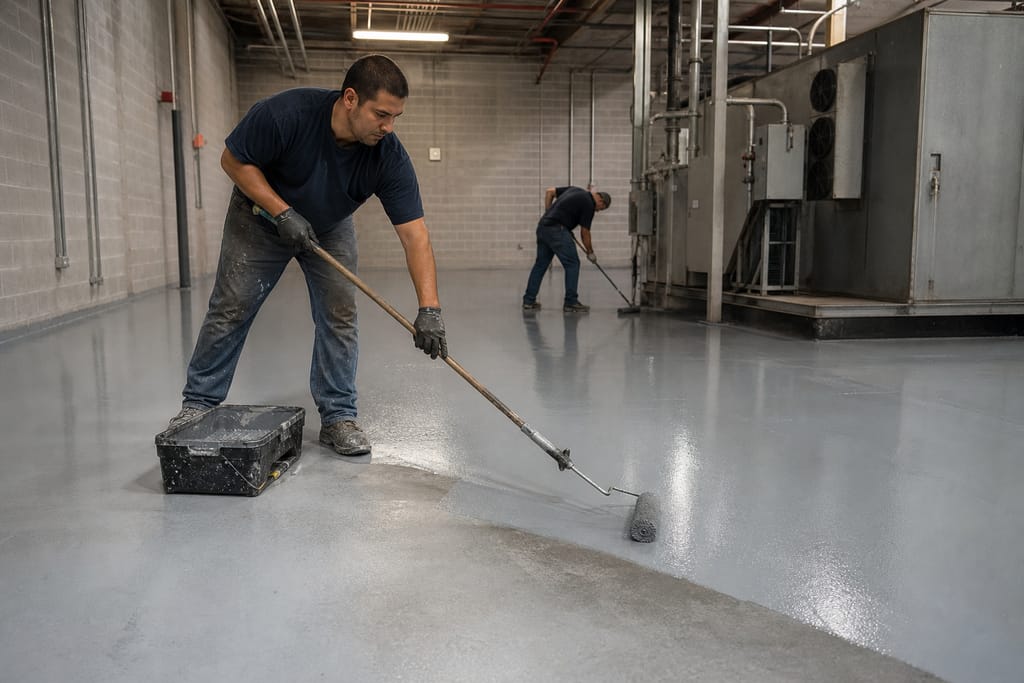
Heat-Resistant Coating
A coating designed to handle elevated temperatures near equipment, relevant for process lines running hot machinery in an already warm Glendale facility.
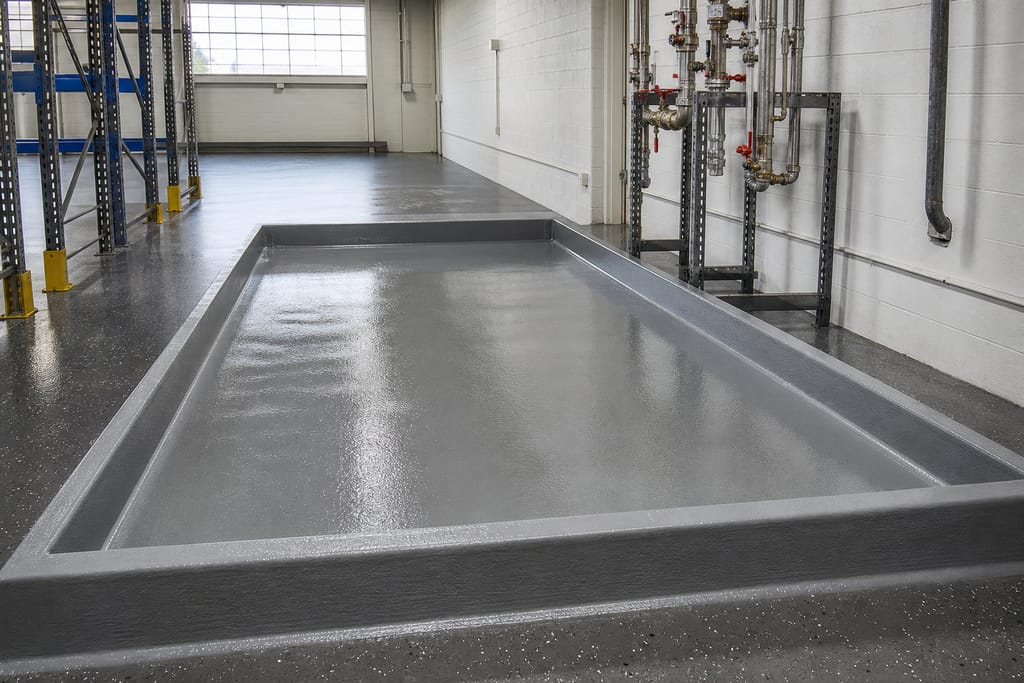
Secondary Containment Liner
A liner system helps contain spills within designated process areas, a common requirement around mixing or storage zones.
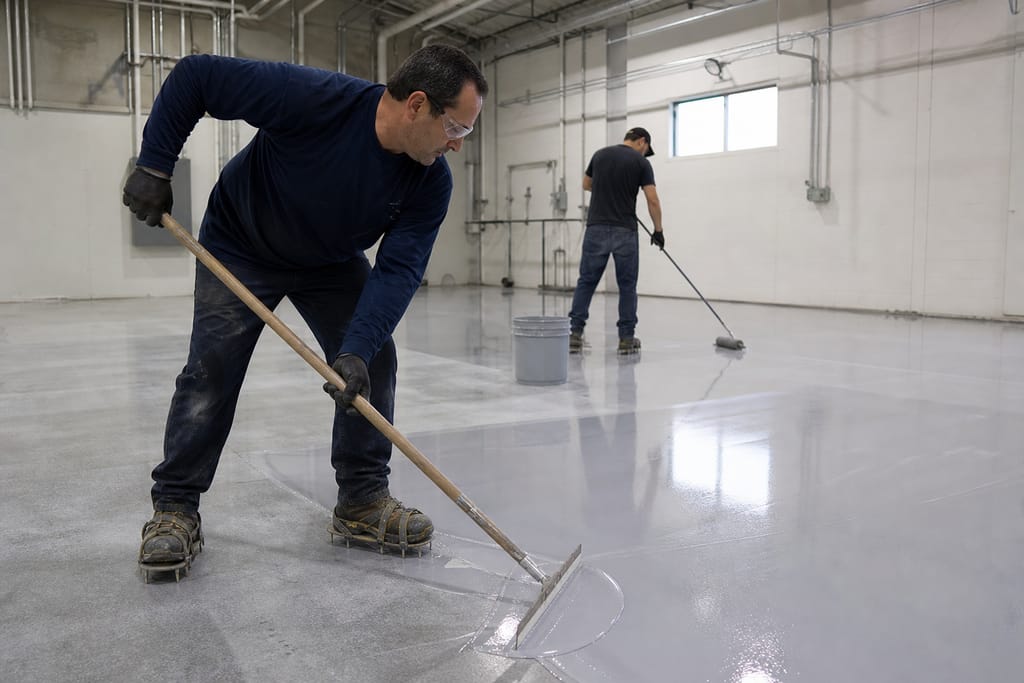
Novolac Epoxy Blend
A high-performance resin blend offers superior chemical resistance for the toughest exposure zones.
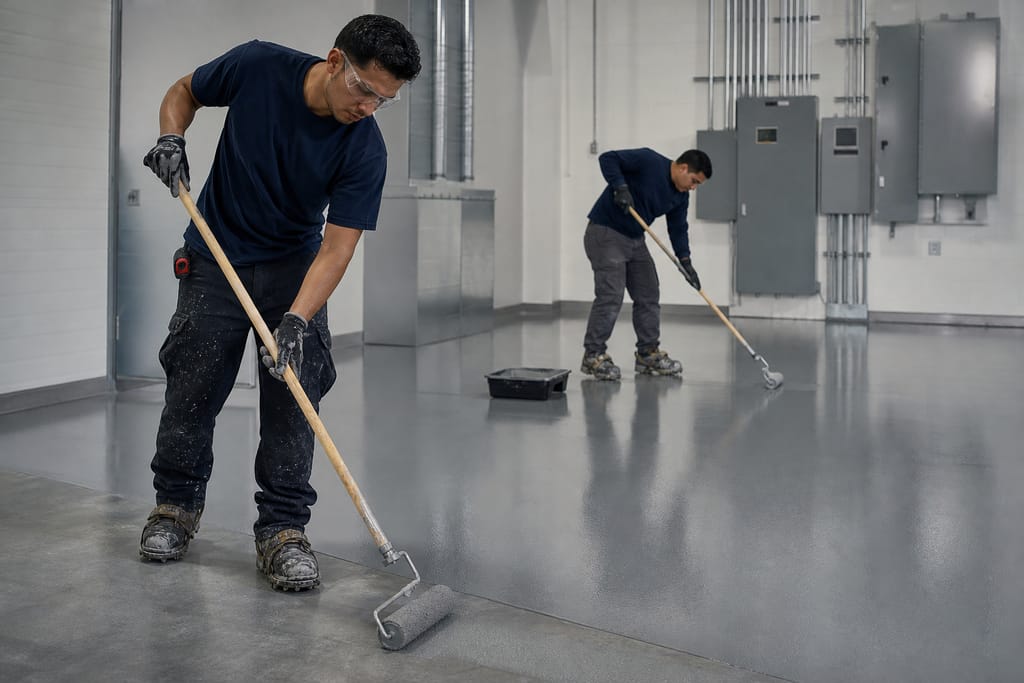
Static-Dissipative Coating
A coating designed to safely dissipate static electricity in areas handling sensitive electronics or flammable materials.
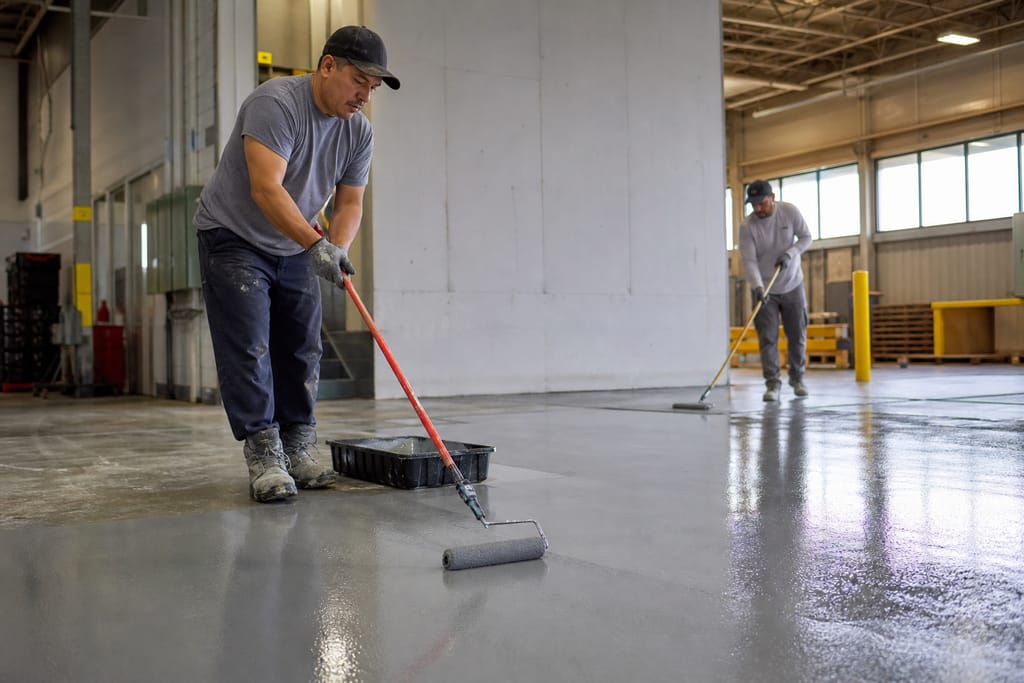
Heavy Traffic Topcoat
A topcoat formulated for constant exposure to heavy machinery and loads without breaking down early.
Questions on materials?
Get a Free EstimateTimeline
How long does a an Industrial Floor Coatings Project take?
Industrial jobs often need longer cure windows than standard coatings because of the layer count and chemical-resistance requirements.
- 01
Process area walkthrough
same day to a few days - 02
Surface prep (shot blast or grind)
1–2 daysdepending on area size
- 03
Primer and multi-layer build-up
2–3 days - 04
Containment detailing
1 day - 05
Extended cure before full chemical exposure
48–96 hours
Need a schedule that fits?
Get a Free EstimateCodes & permits
Permits and Codes for Industrial Floor Coatings in Glendale
Industrial facilities often carry additional compliance requirements beyond standard building permits. Confirm specifics with the City of Glendale or your facility's compliance officer before scheduling work.
| Typically needs a permit | Often no permit |
|---|---|
| New containment systems tied to hazardous material storage | Recoating an existing sound industrial slab |
| Structural slab modifications in process areas | Chemical-resistant topcoat refresh on current flooring |
Need help with permits?
Get a Free EstimateWhen to call
When to Call for Industrial Floor Coatings
Call Glendale Epoxy Pros or request a free estimate to get a coating system matched to your facility's actual exposure.
- Existing coating is visibly etched or breaking down from chemical exposure
- Containment areas show cracking or gaps at the coved base
- A process change is introducing new chemicals the current floor wasn't rated for
- Heat near equipment is causing the coating to soften or discolor
Seeing warning signs?
Get a Free EstimateFAQs
Industrial Floor Coatings FAQs
How much does industrial floor coating cost in Glendale?
Pricing varies widely based on chemical resistance requirements, layer count, and square footage. Most quotes come after a process area walkthrough, so a free estimate gives the real number for your space.
How long does an industrial coating need to cure before use?
Most systems need 48 to 96 hours of cure before the area can handle full chemical exposure and equipment traffic again, depending on layer thickness.
Can industrial coatings handle both heat and chemical exposure in the same area?
Specific resin blends like heat-resistant coatings combined with chemical-resistant topcoats are selected together for zones that see both conditions.
Do industrial floor coatings require a permit?
Recoating existing floors usually doesn't. New containment systems or structural work tied to hazardous material handling often does, and compliance requirements can extend beyond standard building permits.
Is DIY installation realistic for an industrial facility?
No. The surface prep equipment, multi-layer application, and chemical-resistance requirements call for a crew experienced in industrial-grade systems, not a retail coating kit.
More services
Other Epoxy Flooring services
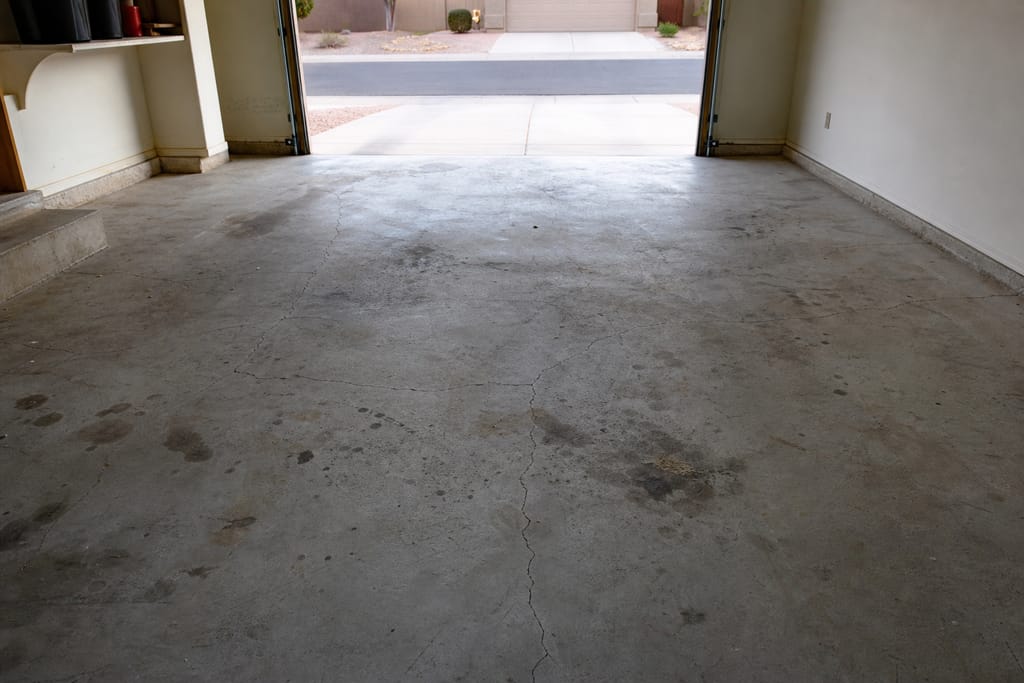
Garage Floor Epoxy Coatings
Garage floor epoxy coatings in Glendale, AZ with grind-first prep and heat-tolerant finishes. Free estimates, no hot-tire pickup.
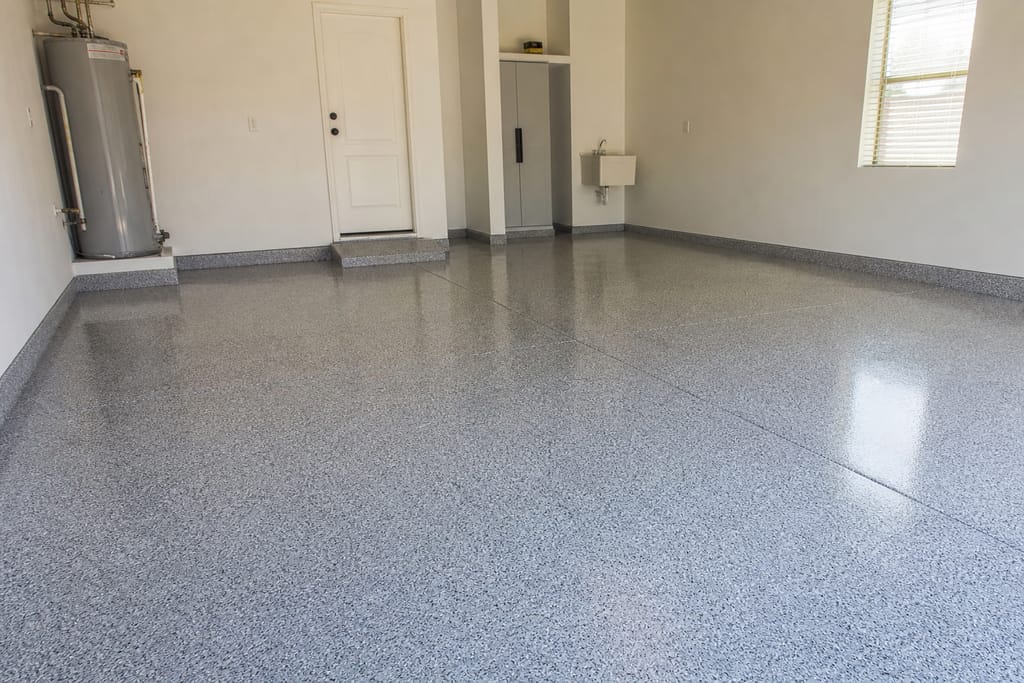
Epoxy Floor Coatings
Epoxy floor coatings for Glendale homes and businesses, UV-stable topcoats and self-leveling options. Free estimates available.
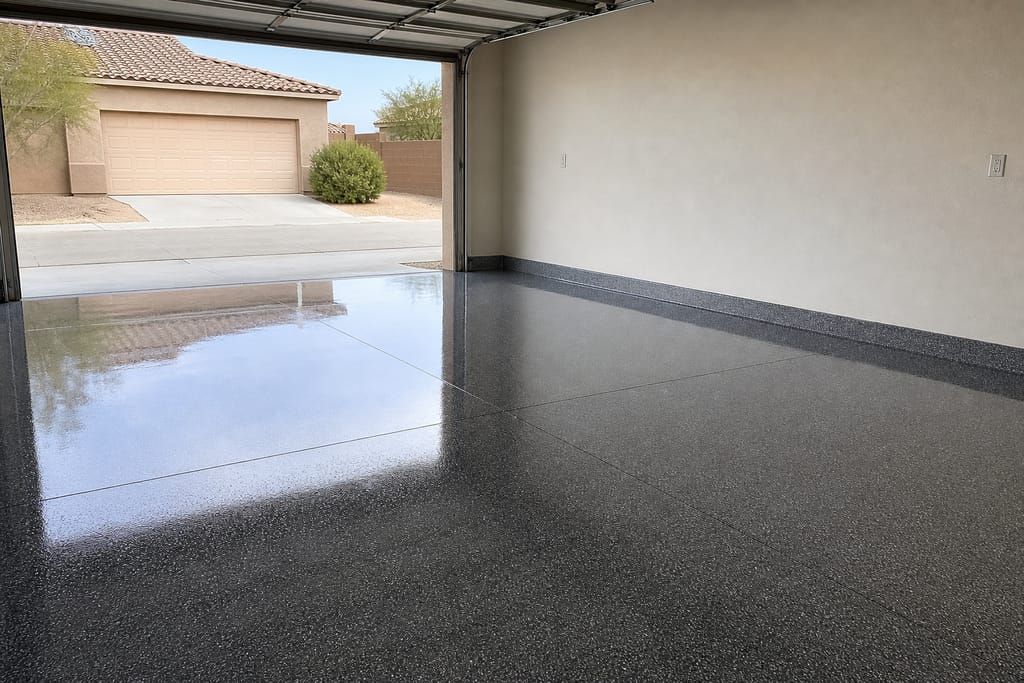
Polyaspartic Floor Coatings
Fast-cure polyaspartic floor coatings in Glendale, AZ. Heat-tolerant, UV-stable finishes with same-day park-ready turnaround. Free estimates.
Ask about Industrial Floor Coatings
Tell us about the project and how to reach you.